

Last updated September 20, 2026
Full 25-point door and opener safety check with every visit - springs, cables, rollers, tracks, and your LiftMaster or Chamberlain opener included
You get a price before we start. It does not change when the truck arrives.
 Before
 After
After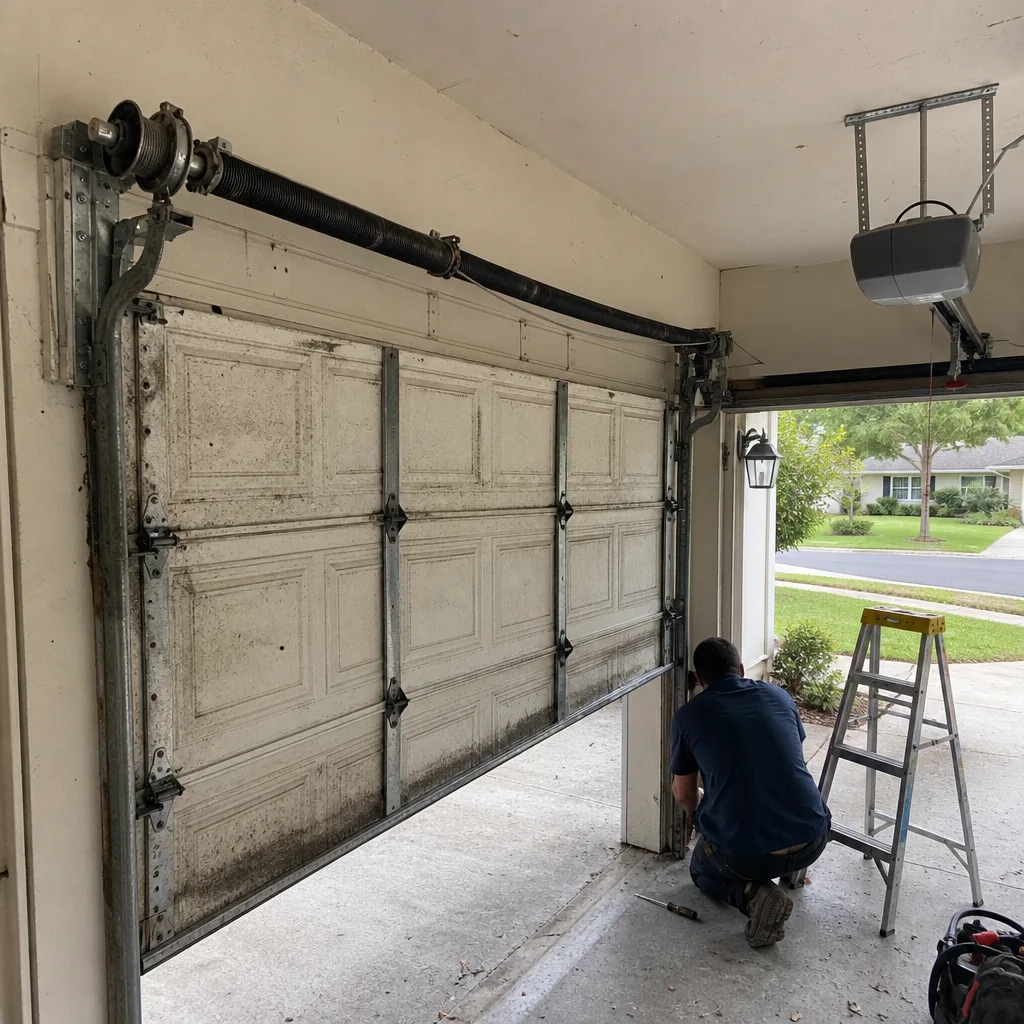 Before
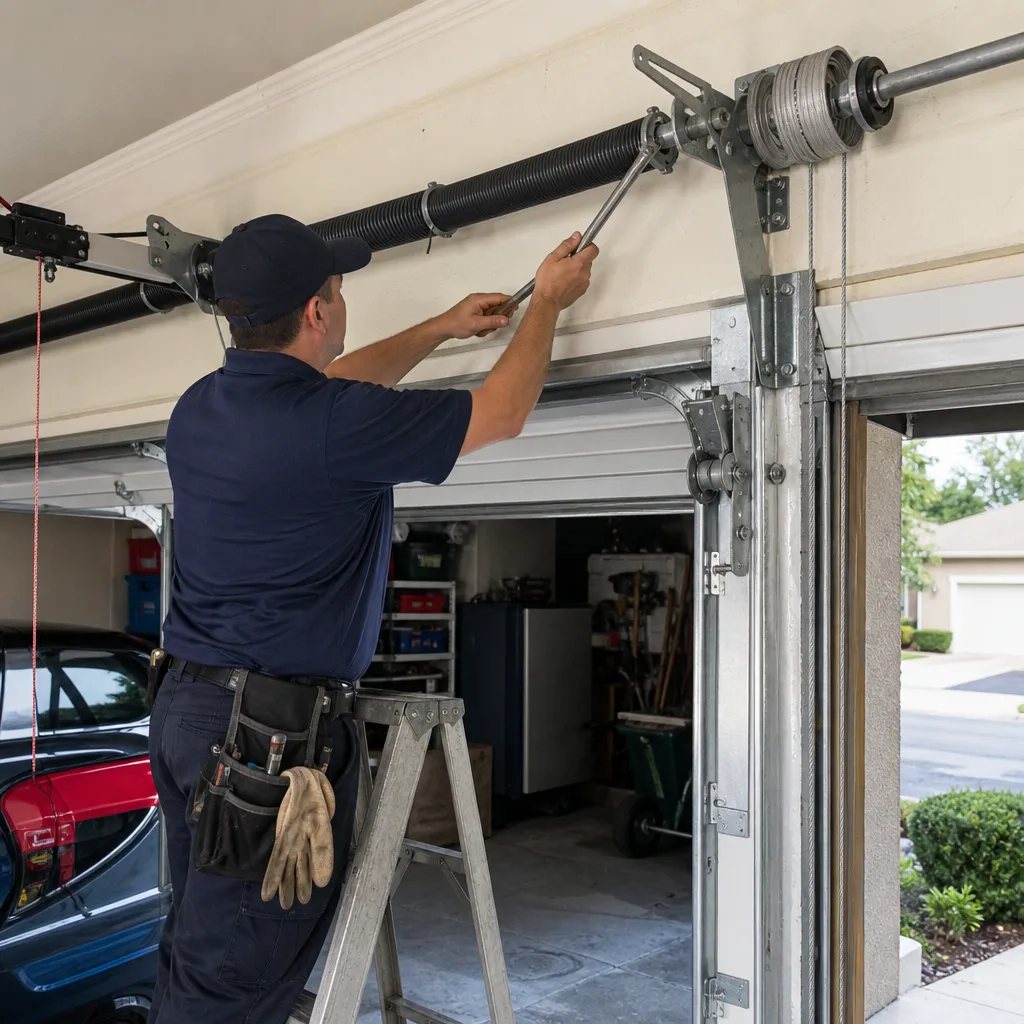 After
After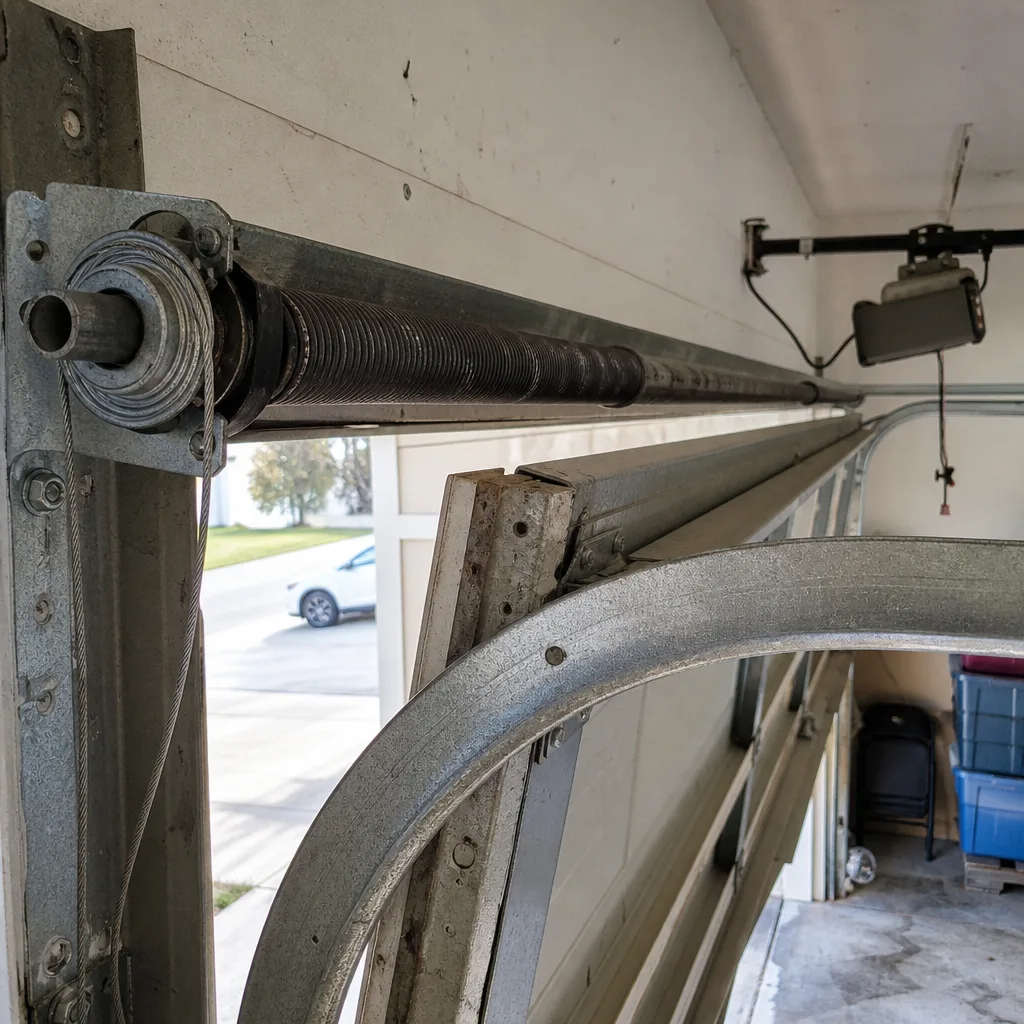 Before
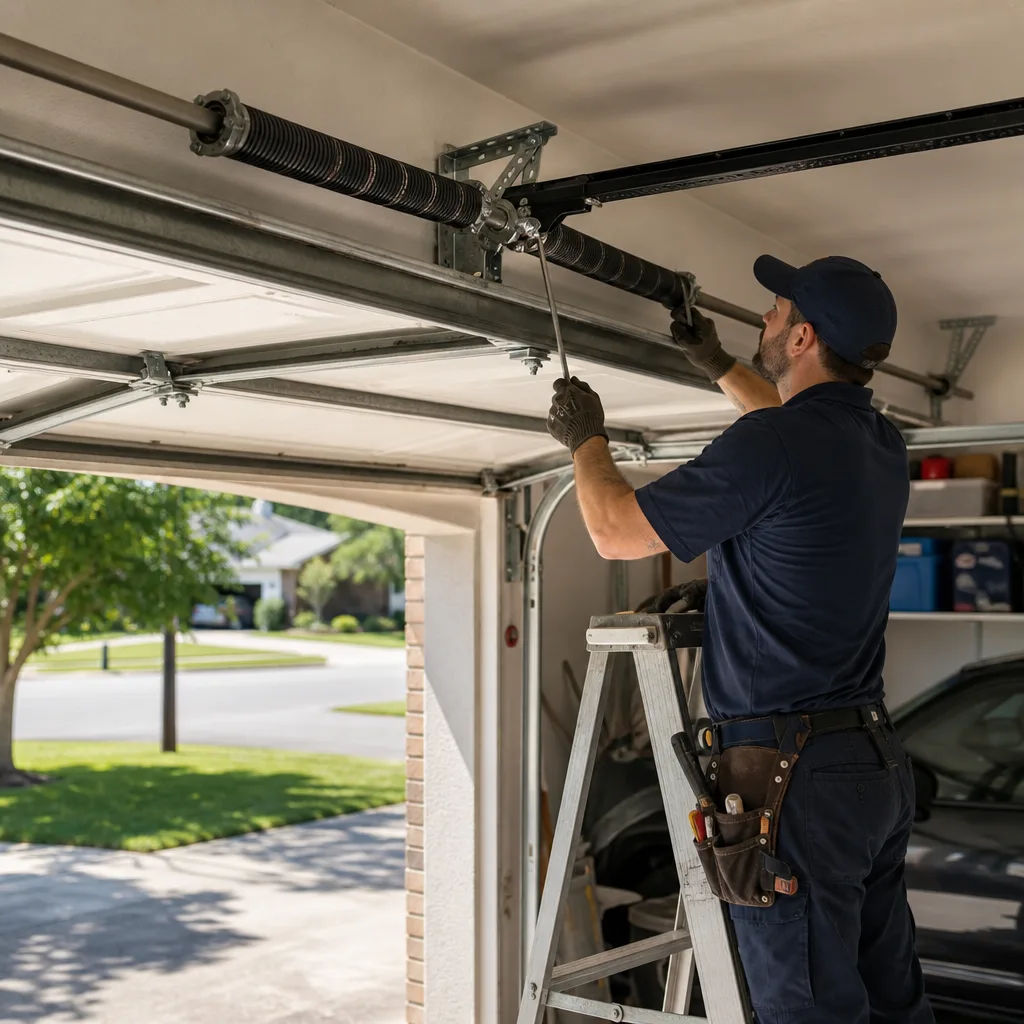 After
AfterSeasonal Garage Door Care for Oviedo: Year-Round Homeowner’s Guide
The January cold snaps that push overnight lows into the high 30s in Oviedo cause more torsion spring failures per week than any other period of the year. Not because the springs are cold. Because the grease applied during Florida’s humid summer months has turned into a resistance-creating paste. This guide explains the two real seasons that govern garage door maintenance in Oviedo, what to inspect during each, and how to document it all so you’re never guessing. For The Complete Guide to Garage Door in Oviedo and more guides & resources, see our blog. You’ll learn what breaks, when it breaks, why it breaks, and what it costs to fix before you ever pick up the phone.
Quick Answer
Oviedo garage doors need two maintenance passes per year, not one. From May through October, humidity and afternoon thunderstorms accelerate rust on tracks, rollers, and hinges. From November through February, overnight temperature drops below 45°F thicken lubricant and push torsion springs past their fatigue limits. A homeowner with a flashlight, a camera, and thirty minutes per season can catch 80% of failures before they happen.
Table of Contents
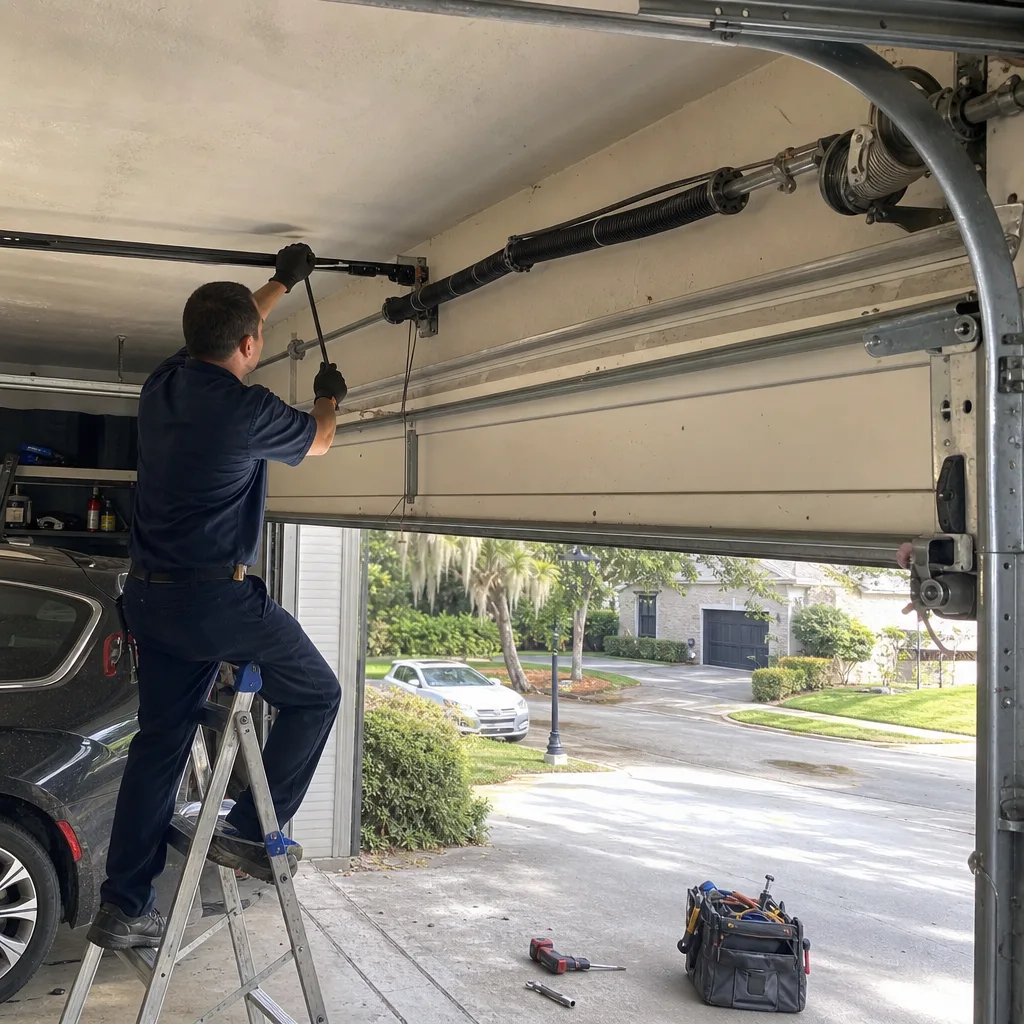
- The Corrosion Season: May Through October
- The Mechanical-Stress Season: November Through February
- Hurricane Prep Window: June 1 Through August 15
- How to Document Your Seasonal Inspections
- The Weatherseal Check Everyone Skips
- Opener Care That Extends Motor Life in Florida
- Common Mistakes to Avoid
- When to Call a Professional
- Frequently Asked Questions
- The Bottom Line
BeforeAfterThe Corrosion Season: May Through October
Oviedo sits about 30 miles inland, far enough from the Atlantic that you might assume salt air doesn’t reach you. It does. The afternoon thunderstorms that roll across Seminole County from late spring through early fall carry enough marine aerosol to accelerate oxidation on any exposed metal surface. Garage door tracks, rollers, hinges, and spring hardware are all candidates. The damage isn’t dramatic. It’s a slow, even layer of surface rust that builds tolerance between moving parts.
What this means for your door: a roller that spun freely in March may be grinding against its track by August. The door doesn’t stop working. It starts working harder, which transfers stress to the operator, the hinges, and eventually the torsion spring. We’ve seen doors in Oviedo neighborhoods like Alafaya Woods and Live Oak Reserve where the owner never noticed the corrosion until the spring snapped, because the extra resistance was absorbed silently. The spring is the component that pays for every millimeter of rust.
Here’s the corrosion season protocol we recommend to every homeowner in Oviedo:
- After any storm with sustained winds over 20 mph: run the door once and listen. A door that sounded smooth last week and now groans or squeaks has picked up moisture or airborne grit.
- Monthly during June, July, August, and September: inspect the vertical tracks for rust blooms at the bolt holes where the track mounts to the wall. This is where water sits longest because it wicks behind the bracket.
- Check roller stems: if you see orange discoloration at the point where the stem meets the wheel, the bearing is starting to bind. Catching this early saves you a roller replacement and often a track adjustment.
- Wipe, don’t spray: use a clean cloth to remove surface grit from tracks. Do not grease the track itself. Grease on a track attracts the fine sand that Florida rain leaves behind.
- Lubricate the right parts: torsion springs, roller bearings, and hinge pins get a light application of a lithium-based or silicone spray lubricant. Not WD-40. WD-40 is a solvent and will strip existing lubrication.
One Oviedo-specific factor most guides miss: our afternoon storms are predictable in timing but unpredictable in intensity. You can set a clock by the 3 p.m. buildup, but the downpour might last ten minutes or ninety. The ten-minute storms are often worse for your door than the long ones, because they deliver a burst of humidity that sits on metal surfaces and evaporates quickly, leaving mineral residue behind. That residue is what pits the galvanized coating on your tracks over time.
If you replaced your door with a Wayne Dalton or Clopay model in the last five years, you may have factory-coated tracks designed to resist this exact pattern. The coating helps. It doesn’t make the track immune. Even coated tracks develop rust at the cut ends and at the mounting holes where the coating was interrupted during installation.
For a deeper look at what happens when corrosion is left untreated, see our page on Garage Door Repair in Oviedo, where we cover the most common failure points we photograph on service calls.
The Mechanical-Stress Season: November Through February
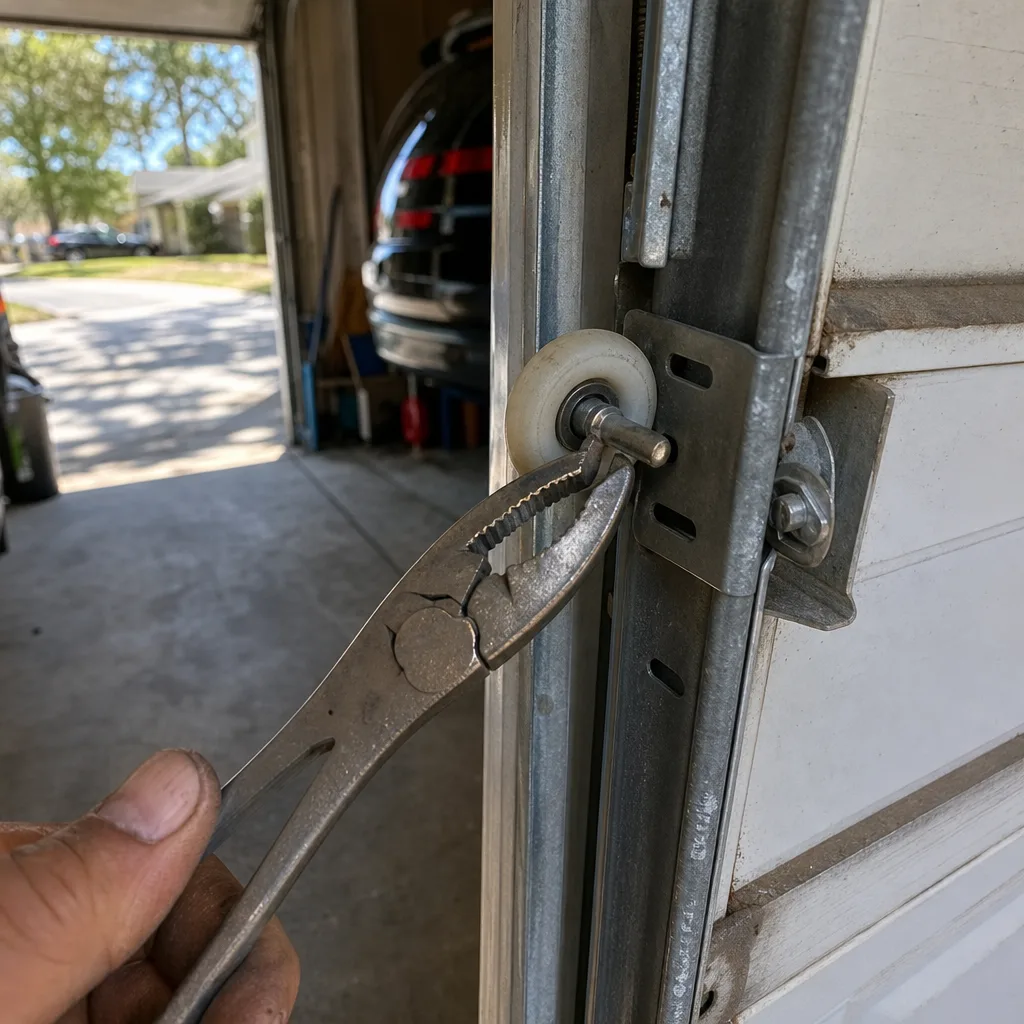
Every winter, Oviedo gets stretches where overnight temperatures drop into the high 30s or low 40s. We rarely freeze, but we get close enough that metal contracts measurably. A standard torsion spring wound to seven and a half turns at 80°F holds measurably different tension at 40°F. The spring doesn’t care about the absolute temperature. It cares about the cycle of contraction and expansion that happens every night for two or three months.
The real problem is lubrication. The grease that worked perfectly in July becomes thick and resistant at 40°F. The spring winds and unwinds thousands of times per week against this thickened lubricant. Each cycle adds micro-stress to the coil. After a few hundred cycles under resistance, a spring that was near the end of its rated life lets go.
We see the pattern every January. Not a slow trickle of spring failures. A cluster, usually following the first week where temperatures stay below 50°F for three or more consecutive nights. Homeowners in neighborhoods like Carillon and Remington Park call us in the same week with the same story: the door worked fine yesterday, made a loud bang this morning.
What to check during the mechanical-stress season:
- After three consecutive nights below 45°F: disconnect the door from the opener using the red manual release cord and run the door by hand. It should move smoothly through the full travel with roughly 8 to 10 pounds of force. If you’re fighting the door at any point, the spring tension needs a professional adjustment.
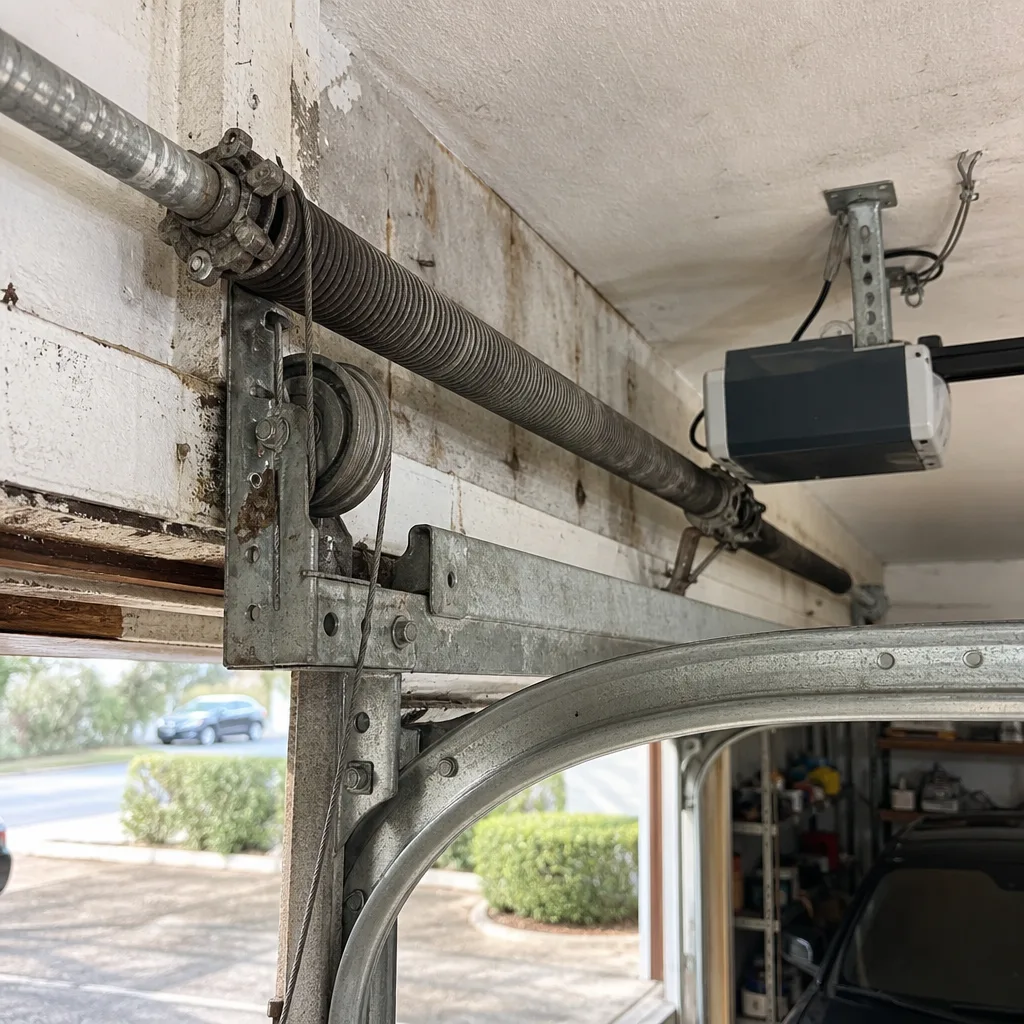
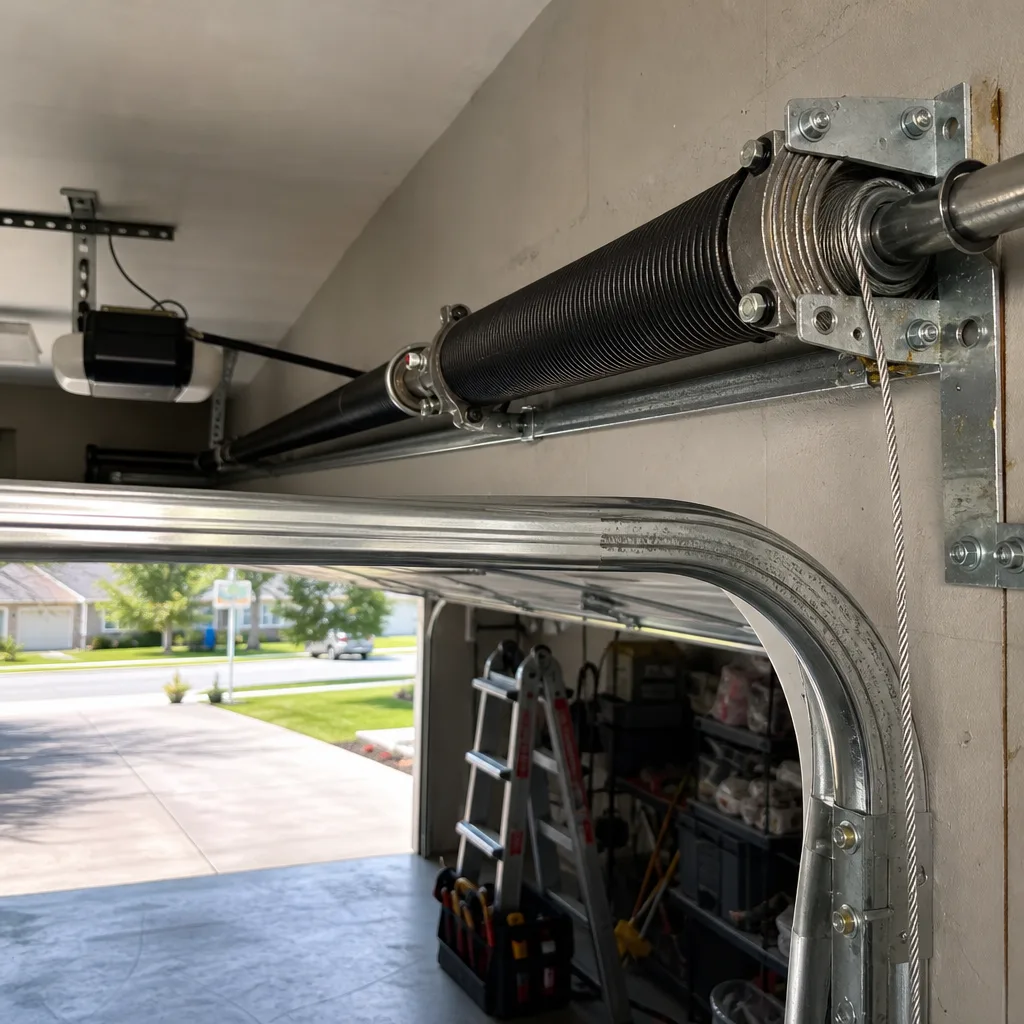
- Inspect the spring coils visually: use a flashlight. Look for gaps in the coil that weren’t there before, or a slight unevenness in spacing. A torsion spring under normal tension has even, consistent gaps. A spring about to fail often shows a widening gap at one end.
- Listen on cold mornings: open the door first thing when the overnight low was under 45°F. A spring under stress makes a popping or ticking sound as it winds. This is different from the smooth whoosh of a healthy spring.
- Count the cycles: every time your door opens and closes is one cycle. Most springs are rated for 10,000 cycles. If your door is ten years old and you use it four times a day, you’re past 14,000 cycles. The spring is on borrowed time regardless of maintenance.
Safety note: do not attempt to adjust torsion spring tension yourself. A torsion spring stores enough energy to break bone or cause serious injury if it releases while you’re working near it. Visual inspection from a stepladder is fine. Tension adjustment requires a trained technician with proper winding bars and an understanding of the door’s weight and balance. This is not a DIY task.
The mechanical-stress season is also when we see the most opener failures. Not because the opener is failing, but because the opener is compensating for a door that has become harder to move. A Genie or LiftMaster opener with a DC motor will push harder to overcome resistance, drawing more current and wearing the drive gear faster. By the time the opener fails, the root cause is often a door that needed service months earlier.
If you’re seeing opener symptoms during the winter months, see our page on Garage Door Opener Repair & Installation in Oviedo for what we check and what those checks typically cost.
Hurricane Prep Window: June 1 Through August 15
Florida’s hurricane season officially starts June 1, but the majority of named storms that affect Seminole County develop between mid-July and early October. The reason we recommend completing your pre-season inspection by August 15 is practical: by then you know what the season is doing, and you still have time to order and install reinforcement before any storm track firms up.
A properly maintained garage door is your home’s single largest opening. During a hurricane, a failed garage door allows wind pressure into the structure, which can lift the roof and cause catastrophic damage. Most Florida insurance policies now include specific language about garage door condition in their documentation requirements. Having a dated, photographed inspection record on file before the season starts is the single most useful thing a homeowner can do from a claims standpoint.
The pre-season inspection sequence we recommend:
- Track alignment check: stand inside the garage with the door closed and look down each track. Both tracks should be plumb vertical. Any bowing or inward lean means the roof load on the door during high winds will be unevenly distributed.
- Door balance test: disconnect the opener and operate the door by hand. A balanced door stays where you leave it at the halfway point. A door that falls or rises is out of balance, and the spring is doing more or less work than it should be.
- Hinge and bracket inspection: every hinge has four bolts. Check all of them. A missing or loose bolt is a failure point that wind will find and exploit.
- Reinforcement assessment: if your door was manufactured before 2007, it likely lacks the horizontal strut reinforcement required for post-Andrew Florida building codes. An Amarr or Clopay door built in the last decade generally includes this as standard. If you’re unsure, a technician can identify reinforcement in about five minutes.
- Photo documentation: photograph every component from a consistent angle and save the photos in a dated folder. More on this below, because it matters more than most homeowners realize.
The insurance angle is worth stating directly: Florida insurers routinely deny or reduce wind-damage claims when the homeowner cannot demonstrate that the garage door was maintained before the storm. A dated photo set, even a simple phone camera set, changes that conversation. It doesn’t have to be professional photography. It has to exist before the storm, not after.
For new door installations that meet current wind-load requirements, see Garage Door Installation in Oviedo for what we quote and how the process works.
How to Document Your Seasonal Inspections
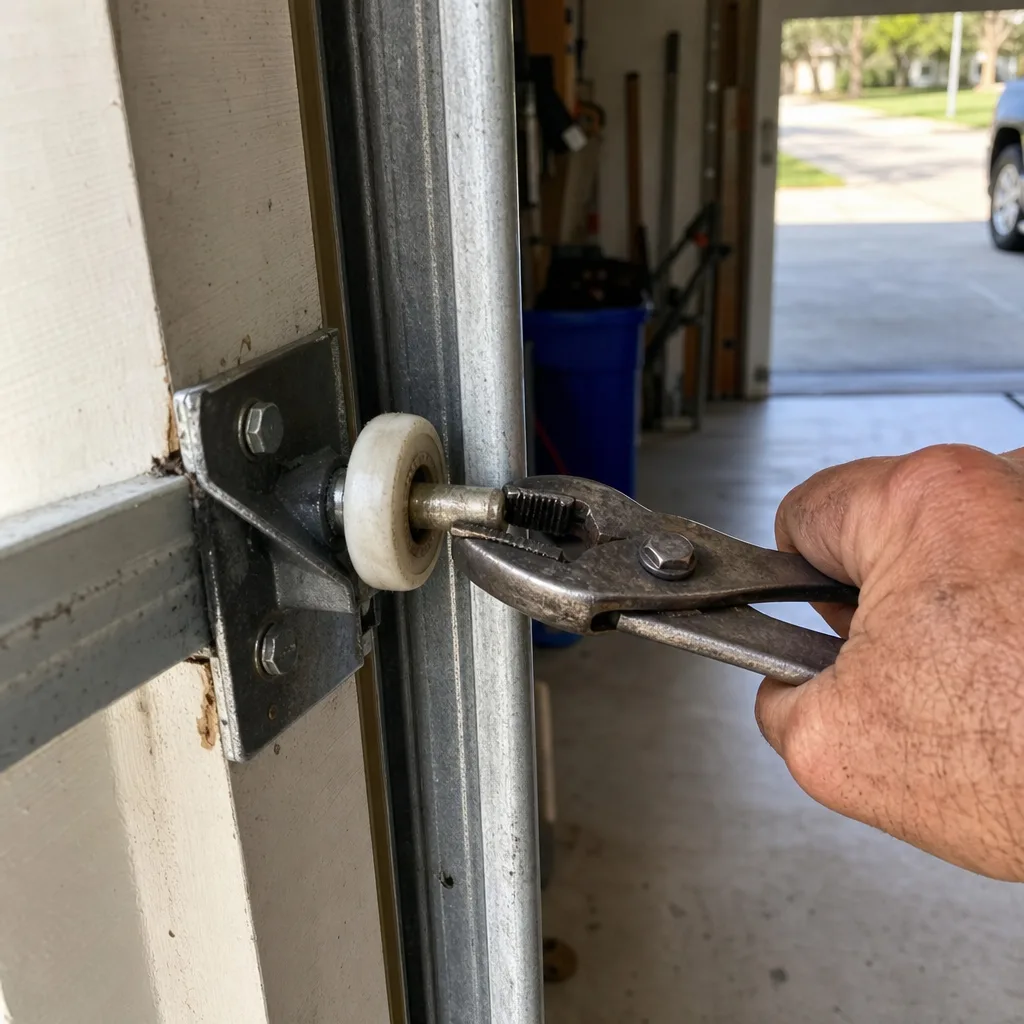
The most concrete thing any Oviedo homeowner can do for their garage door is build a photographic record. Not because it helps us as technicians, though it does. Because it protects you in two specific situations: when an insurance adjuster asks what condition the door was in before the storm, and when a contractor claims the damage they’re now quoting was pre-existing.
We built our entire company on this principle. The founding rule at Servo Garage Doors has always been that the customer sees the failed part before anyone quotes a replacement. That rule became Clause 4 of The Haven Standard, the written operating standard every Servo technician works under. Photograph the failure. Show the customer. Then quote. It eliminates the most common abuse pattern in the garage door industry, which is convincing a homeowner that a part failed when it didn’t.
Your home documentation system doesn’t need to be complicated. Here’s what we recommend:
- Create a folder on your phone called “Garage Door” with subfolders by year, then by season. “2026-Corrosion” and “2026-Mechanical” is enough.
- Photograph the same eight components every time: left vertical track, right vertical track, left horizontal track, right horizontal track, torsion spring assembly, each hinge line (four photo minimum), bottom weatherseal, and opener rail.
- Use the same angles each season. Stand in the same spot. Point the camera the same way. The value in a photo record is the change you can see between photos, and change only shows against consistent framing.
- Include a reference object for scale in at least one photo per season. A quarter next to a spring coil tells you more about coil gap than a bare spring photo.
- Write down two measurements each time: the gap between the bottom of the door and the floor at both corners when closed, and the gap width at each spring coil. Not precise. Just consistent.
When a technician from any company services your door, ask to see photos of the failed component before approving a replacement. If the answers are vague, that’s an answer in itself. At Servo, the photo record is included with every visit, not offered as an add-on. It’s what leaving looks like when the job is done.
The Weatherseal Check Everyone Skips
The bottom weatherseal is a strip of rubber or vinyl that runs along the bottom edge of the door, compressing against the concrete floor when the door is closed. It does three jobs: keeps rainwater from pooling under the door during Oviedo’s afternoon downpours, blocks the gap that insects and small pests use to enter the garage, and reduces the air exchange between the conditioned air in your garage and the outside air.
It is also the single most frequently skipped inspection point in Oviedo, for one reason: it requires getting on the floor. You cannot see the condition of the weatherseal from a standing position. The door blocks the view. You have to crouch or sit.
What to look for when you do:
- Flattening: a healthy seal has a visible bulb or lip profile. A flattened seal has compressed permanently and no longer makes consistent contact with the floor.
- Cracking: Florida UV exposure degrades rubber seals within three to five years. Fine cracks along the length are early-stage; sections that have split through are late stage.
- Gaps: close the door and check from the inside on a sunny day. Sunlight visible under any section of the door means the seal has failed at that point.
- Debris accumulation: pine needles and leaf matter from Oak Hammock and other tree-heavy neighborhoods wedge into the seal channel and prevent proper compression.
A failed weatherseal costs between $15 and $40 for the material and takes about twenty minutes to install properly. The energy savings alone offset that within a season if your garage is conditioned or shares a wall with living space. The pest-control benefit is harder to quantify, but ask anyone who has dealt with a palmetto bug colony in early summer: the bug that gets in through a bad seal is more expensive than the seal.
Weatherseal replacement is one of the most common items we flag during maintenance visits, often on doors where the owner thought everything was fine. It’s also one of the few garage door repairs where the homeowner can see the before-and-after difference the same day.
Opener Care That Extends Motor Life in Florida
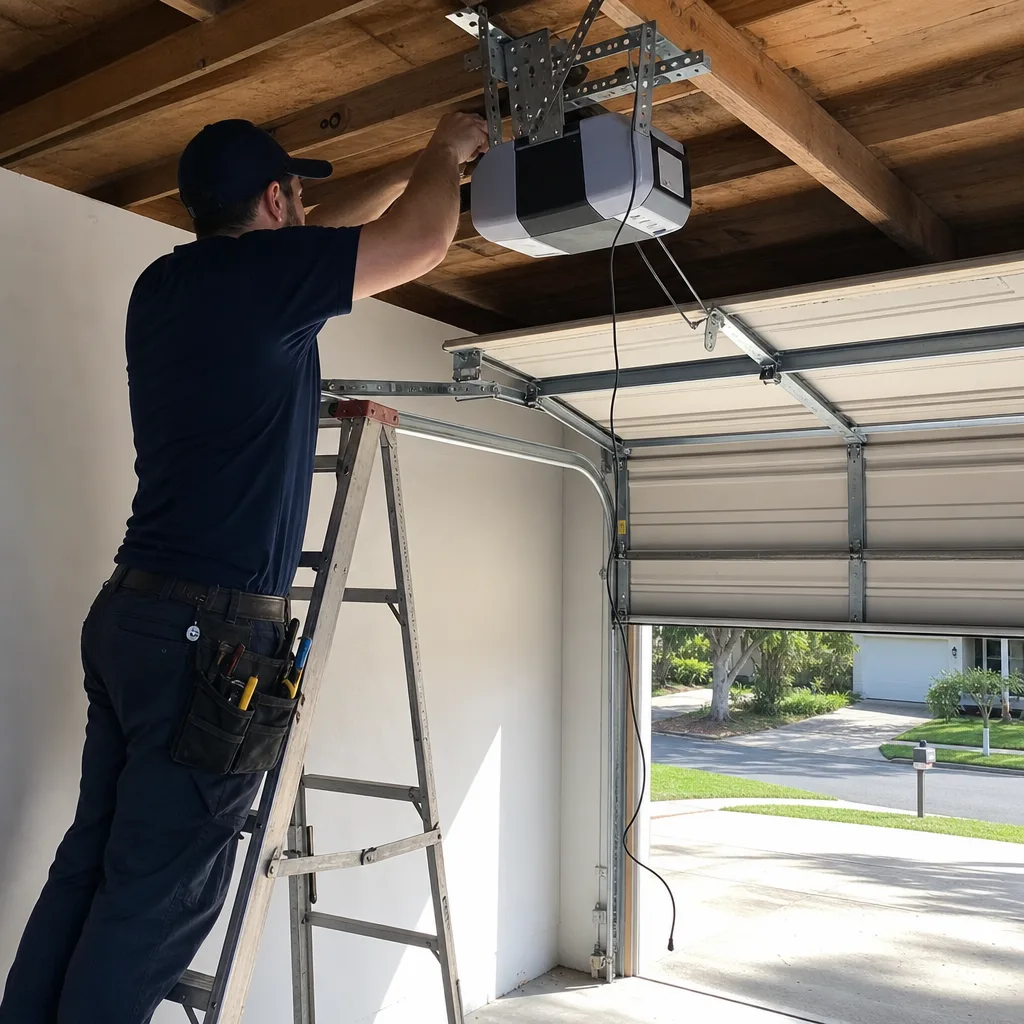
Garage door openers in Oviedo have a shorter average life than openers in drier climates. The same humidity that attacks your tracks also attacks the opener’s logic board, the small circuit panel that interprets your remote signal and commands the motor. Florida’s combination of heat and moisture accelerates corrosion on the board’s connectors. The symptom is familiar: the opener works intermittently, or stops responding to the remote but works from the wall button.
Some opener maintenance you can do without calling anyone:
- Keep the opener’s light cover in place: it’s not cosmetic. The cover directs heat away from the logic board and protects it from the humid air that rises into the ceiling of your garage.
- Check the safety sensor lenses monthly: those two small units near the floor on either side of the door opening get coated with dust and insect residue faster in Florida than anywhere else. A clean lens means fewer false reversals.
- Listen to the motor: a LiftMaster or Genie opener with a worn drive gear makes a distinct grinding sound under load. It’s different from the normal hum. If you hear it, stop using the opener and address the problem before the gear strips completely.
- Replace remote batteries seasonally: the wireless signal from the remote weakens as battery voltage drops, and the opener compensates by working harder to interpret the signal. Change both remote and wall-pad batteries every six months.
If your opener is more than twelve years old and showing any of these symptoms, replacement is usually more cost-effective than repair. The current generation of openers from LiftMaster and Genie use DC motors that run quieter, draw less current, and include battery backup as a standard or near-standard feature. Battery backup matters in Oviedo, where afternoon storms routinely knock out power for hours at a time.
For more detail on opener diagnostics and what replacement typically costs in Oviedo, see Garage Door Opener Repair & Installation in Oviedo.
Common Mistakes to Avoid
- Lubricating the wrong parts. Greasing a garage door track attracts sand and grit in Florida’s dusty dry-season months, turning the track into sandpaper. Lubricate springs, rollers, and hinge pins. Wipe the track clean and leave it dry.
- Ignoring the door balance. A door that is out of balance puts constant strain on the opener’s drive gear and shortens spring life by thousands of cycles. The balance test takes sixty seconds and requires no tools.
- Assuming a loud door is a normal door. A garage door that bangs, pops, or grinds is telling you something specific. In Oviedo, early corrosion season noise is often the precursor to a mechanical-stress season failure that could have been prevented.
- Replacing the opener before checking the door. If the door itself is binding or out of balance, a new opener will fail prematurely, and you’ll have spent $400 to $600 to replace a symptom instead of the cause.
- Skipping the photo documentation. Even a few seconds of cell phone video per component per season changes what you can prove to an insurance adjuster or a contractor after the fact.
- Treating hurricane prep as optional. In Oviedo, with our exposure to Atlantic storm tracks, the garage door is a structural element. Pre-season inspection is as much a part of hurricane readiness as generator fuel and window film.
- Using WD-40 as a garage door lubricant. WD-40 was designed as a water displacement formula, not a lubricant. It strips the grease you do want and leaves metal surfaces vulnerable to the exact corrosion Oviedo’s climate creates.
When to Call a Professional
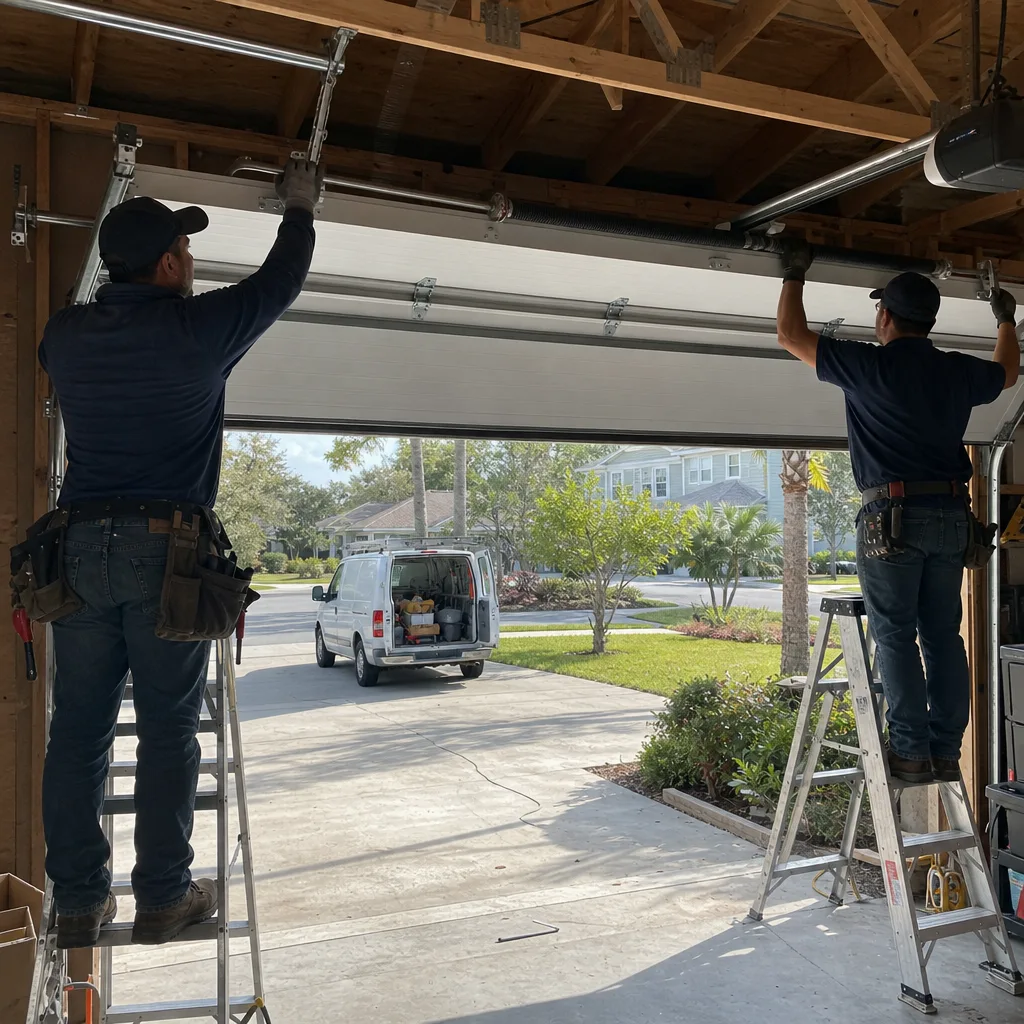
Some things you check. Some things you fix. Some things a professional should handle. Any adjustment involving torsion spring tension falls into the third category. A torsion spring under load stores enough kinetic energy to break wrists or worse if the spring releases while you are near it. Visual inspection from a distance is safe. Tension adjustment is not.
You should also call a professional when you find a broken spring, a bent track, a door that has come off its rollers, or an opener logic board that is visibly corroded. These are not maintenance items. They are repair items, and the fix requires specific tools and experience. Servo Garage Doors Oviedo offers free estimates in Oviedo, and every estimate includes a written price and written scope before any work starts. Call (689) 666-4089.
Frequently Asked Questions
Twice per year, scheduled around the two real seasons: once in late spring before the afternoon storm pattern establishes, and once in late fall before the overnight temperature drops begin. A professional service visit catches the corrosion damage that a visual inspection from the ground will miss, and it gives you a dated paper trail for insurance purposes.
Torsion spring repair in Oviedo typically runs between $180 and $340, including the replacement spring and the labor to wind and balance it. For a full breakdown of pricing factors, see our Garage Door Cost Breakdown: The Oviedo Homeowner’s Reference for 2026. The price depends on the door’s weight and the spring’s wire diameter, which determines whether it’s a standard or heavy-duty application. Servo Garage Doors quotes a flat, written price before any work begins, so the number you approve is the number you pay. Call (689) 666-4089 for an exact quote.
Yes, if you’re lubricating springs, rollers, and hinge pins from a stepladder with the door closed and the opener disengaged. Use a lithium-based or silicone spray, never WD-40. Do not attempt to lubricate or adjust anything that requires removing bolts, loosening hardware, or touching the winding cone on a torsion spring. That is professional work.
The squeak is almost always water or humidity residue on the roller bearings or hinge pins. Oviedo’s afternoon storms deposit mineral residue on metal surfaces, and that residue increases friction between moving parts. A light application of silicone lubricant on the rollers and hinges usually clears it. If the squeak persists after lubrication, the roller bearings are likely worn and need replacement.
It depends on your policy, but most Florida insurers now include language requiring that wind-resistant components, including garage doors, be maintained before the storm season. A dated photo record of your pre-season inspection satisfies the documentation standard in most cases. The insurance question is one reason we document every service visit with photos at Servo Garage Doors, not just the visits where something broke.
Ten to twelve years is typical for an opener in Oviedo’s heat and humidity, which is three to five years shorter than the national average. The logic board and drive gear are the two components most affected by Florida conditions. If your opener is older than twelve years and showing any symptoms, replacement is usually the more economical choice. Estimates are free at (689) 666-4089.
The Bottom Line
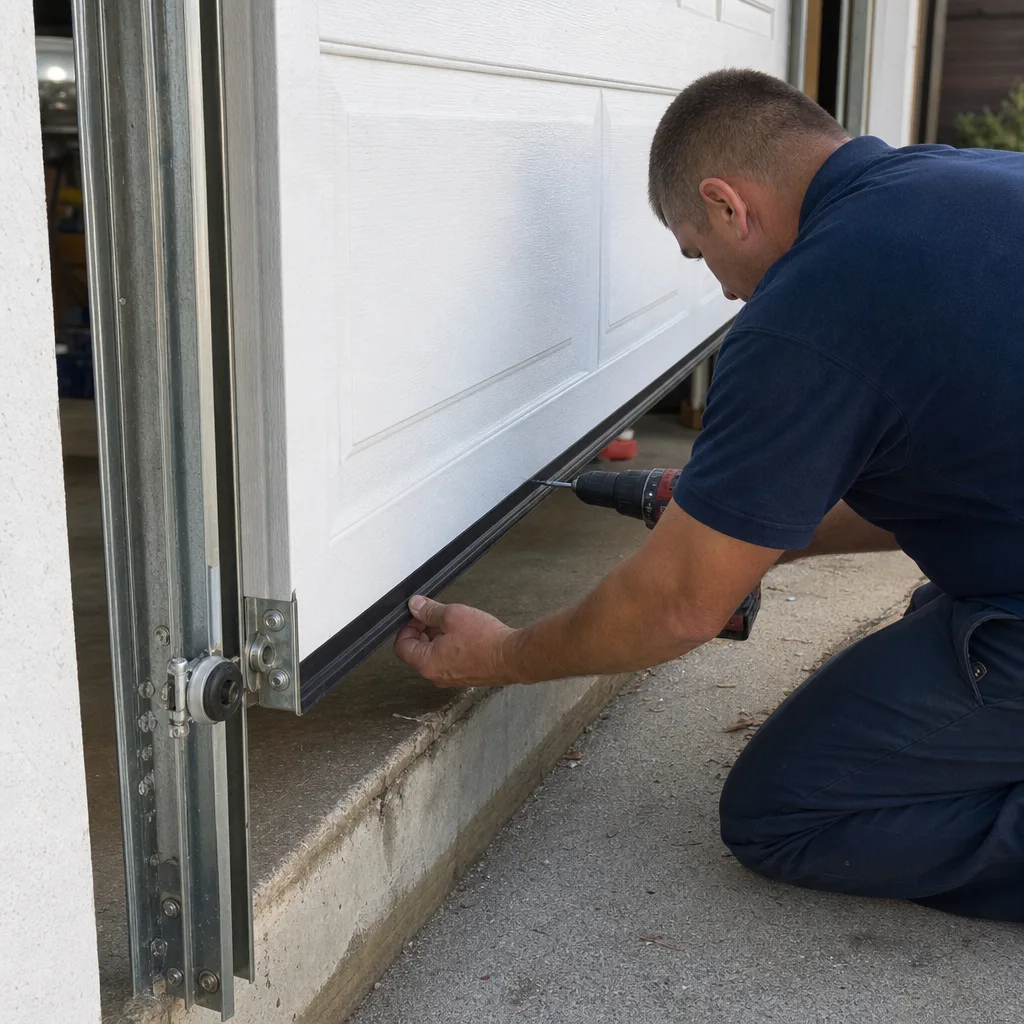
Your garage door in Oviedo does not need the spring and fall checkup you’d read about in a generic maintenance guide. It needs a corrosion pass during the humid months and a mechanical pass during the cold months. Do the inspection. Photograph what you see. Lubricate the right parts and never the track. Check the weatherseal before hurricane season and after the first cold snap. If you find a problem you can’t fix safely, call a professional who will show you the failed part before quoting a replacement. That’s the standard at Servo Garage Doors, and it’s what every homeowner in Oviedo should expect. For more guides & resources, visit our blog.
Written by Marcus Deller, Owner at Servo Garage Doors Oviedo, serving Oviedo since 2015.