
Last updated September 20, 2026
Full 25-point door and opener safety check with every visit - springs, cables, rollers, tracks, and your LiftMaster or Chamberlain opener included
You get a price before we start. It does not change when the truck arrives.
 Before
 After
After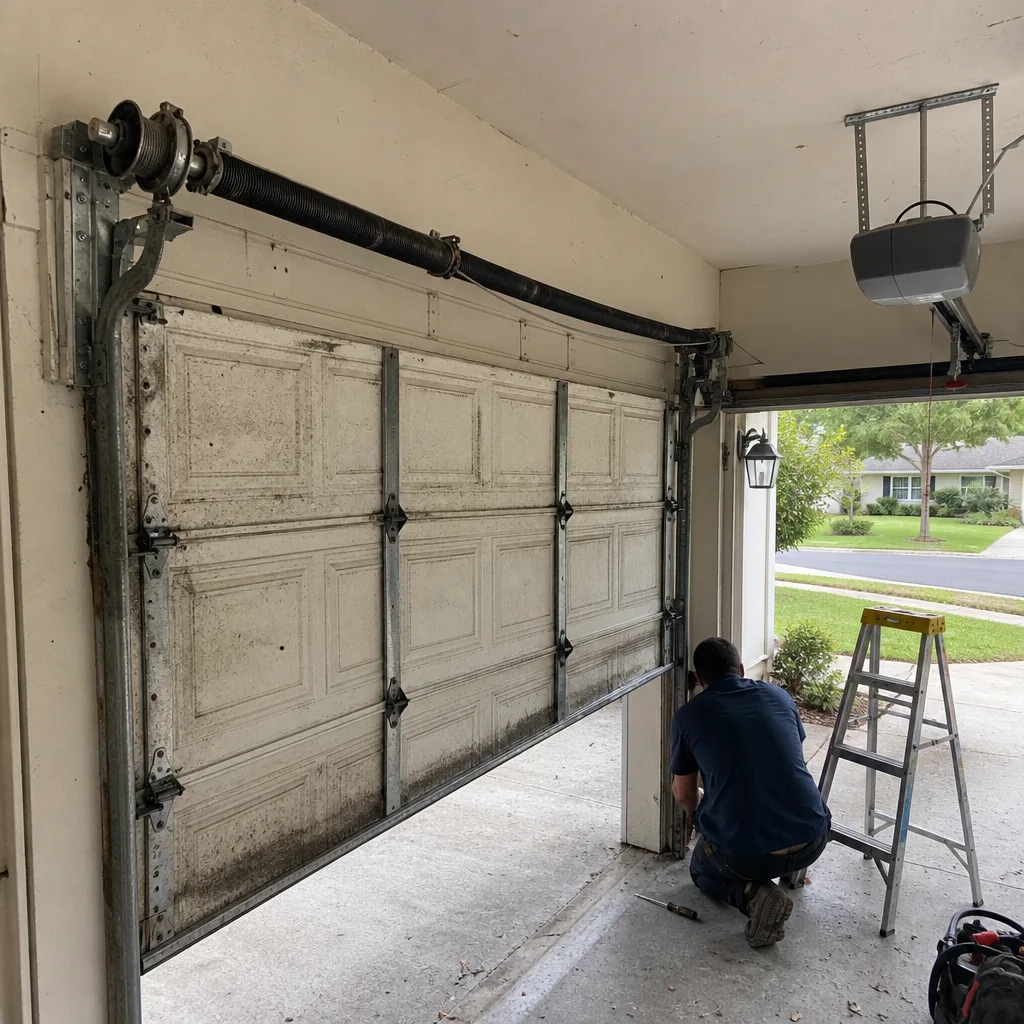 Before
 After
After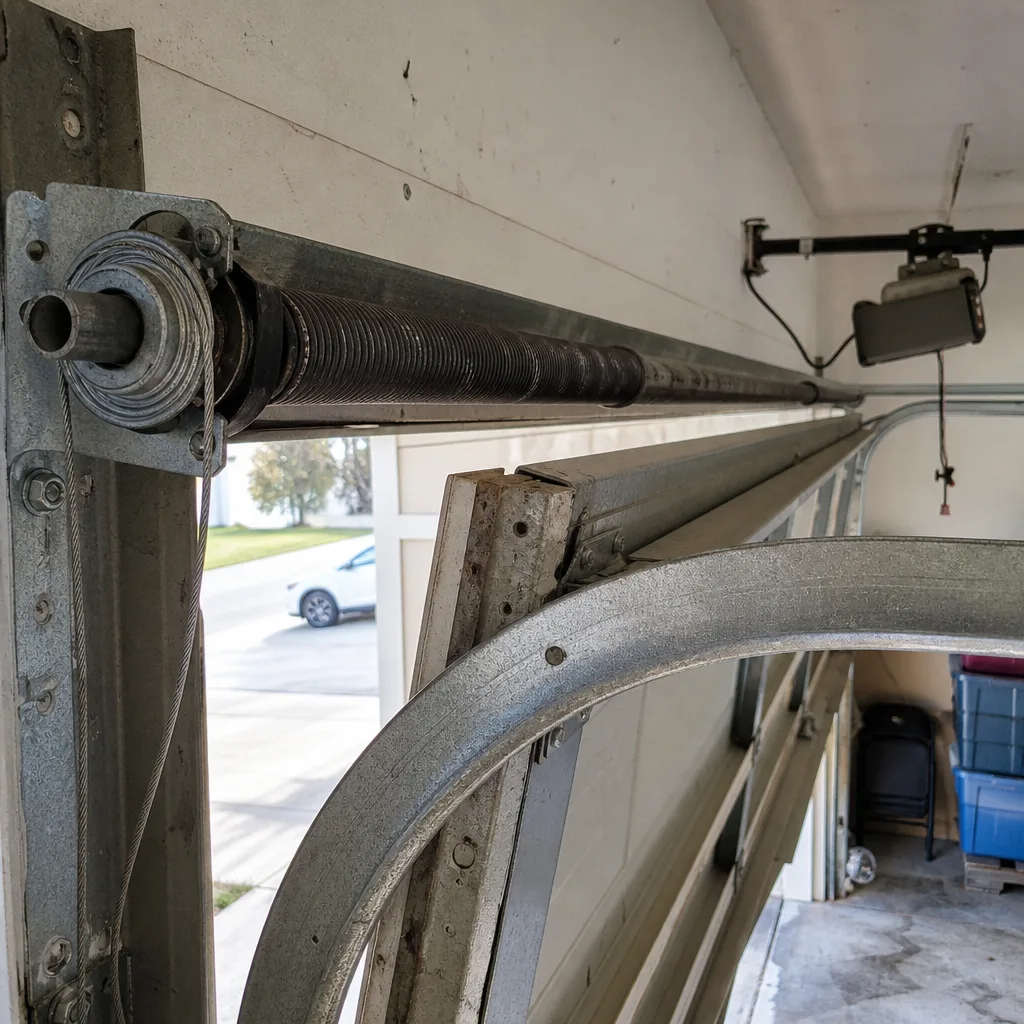 Before
 After
AfterGarage Door Repair Maintenance Checklist for Oviedo Homeowners
The most common cause of a broken torsion spring in Central Florida is not age. It is lubricating it with the wrong product during the wrong humidity window, which accelerates stress-corrosion cracking rather than preventing it. This Garage Door Warning Signs: A Oviedo Homeowner’s Reference Guide is built around Oviedo’s actual failure calendar: peak corrosion season in August, the hurricane-prep window in June, and a brief low-humidity stretch in January that is the only genuinely safe time to lubricate certain components. We’ll walk through a month-by-month checklist, name the products that work in our climate, and explain how to photograph what you find so no contractor can ever tell you a part “has been failing for a while” without showing you evidence.
Quick Answer
A garage door maintenance checklist for Oviedo homeowners should follow the local calendar, not a generic four-season model: lubricate moving parts only during low-humidity windows in January and November, tighten and inspect hardware monthly, test safety reversal and force settings quarterly, and complete a full hurricane-prep sequence every June before storm season peaks. Most spring failures here trace back to lubricant choices made during humid months, and most motor failures trace back to ignored alignment drift that could have been caught with a tape measure and a level.
Table of Contents
- January: The Only Safe Lubrication Window of the Year
- The Monthly Five-Minute Inspection (Every Month, No Exceptions)
- The Three Measurements That Catch 80% of Alignment Problems
- How to Photograph and Document Every Inspection
- June: The Hurricane-Prep Sequence for Oviedo Garage Doors
- August: Peak Corrosion Season and What to Check
- Which Tasks Void Warranty Coverage (And Which Require a Licensed Technician)
- Common Mistakes to Avoid
- When to Call a Professional
- Frequently Asked Questions
BeforeAfterJanuary: The Only Safe Lubrication Window of the Year
Oviedo’s average relative humidity runs above 70 percent for most of the year. Lubricating a garage door in that environment traps moisture against metal surfaces, which is how a maintenance task becomes a corrosion accelerator. January is the exception. Our humidity drops into the 50s and low 60s, sometimes lower after a cold front pushes through, and that matters because the lubricant can cure and bond without sealing condensation against the spring or track.
Here is what to lubricate in January, and with what:
- Torsion springs (galvanized): Use a lithium-based spray grease, not WD-40. WD-40 is a solvent with light lubricating properties and will strip whatever protective coating remains on the spring. We see this on garage door repair calls in Oviedo more than any other single mistake. A lithium grease like Lucas Oil White Lithium Grease or Blaster Lithium Grease is compatible with galvanized coatings and resists washout.
- Rollers with metal bearings: If your rollers have exposed ball bearings, a few drops of a light machine oil like 3-IN-ONE Multi-Purpose Oil works. Do not grease nylon roller wheels themselves; the grease attracts grit.
- Hinges and pivot points: White lithium grease applied sparingly to each hinge pin. Wipe away excess with a rag. Excess is a dirt magnet.
- Chain-drive opener rails: A thin coat of lithium grease on the chain only, not the rail. Genie and LiftMaster chain-drive openers have slightly different tension specs, but the lubrication rule is the same: the chain gets lubricant, the rail stays dry.
- Screw-drive openers: These require a screw-drive-specific grease, typically a thin white lithium formula. Check your opener manual for the manufacturer’s recommendation; Chamberlain screw-drive units differ from older Genie screw-drive units in the required viscosity.
What you skip in January: the tracks. The vertical and horizontal tracks should remain dry in every month of the year. Adding grease or spray lubricant to tracks causes the rollers to slide instead of roll, which accelerates roller wear and creates a film that holds sand and grit. If your door sounds like it is grinding, the problem is misalignment or a worn roller, not a dry track.
If you miss January, the secondary window is November, when humidity drops again after the summer. Miss both and you are better off waiting another year than lubricating in July. That advice sounds extreme, but the failure pattern in Central Florida is consistent: springs lubricated during humid months develop stress-corrosion cracking at the coil surface, and the break typically follows within 18 to 24 months.
The Monthly Five-Minute Inspection (Every Month, No Exceptions)
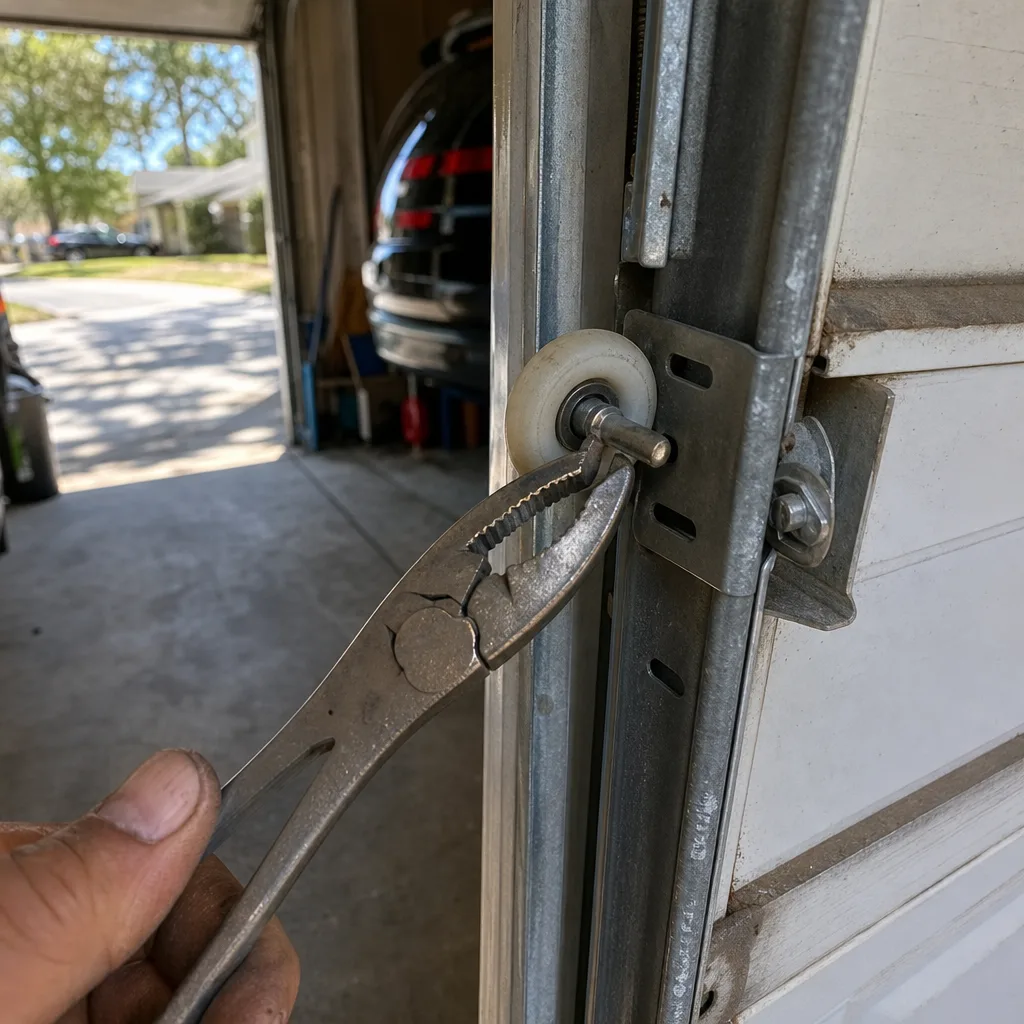
This is the inspection that catches problems before they become repair calls. It takes five minutes and requires no tools beyond your eyes and hands. Do it on the first Saturday of each month so it becomes a calendar habit.
Here is the sequence:
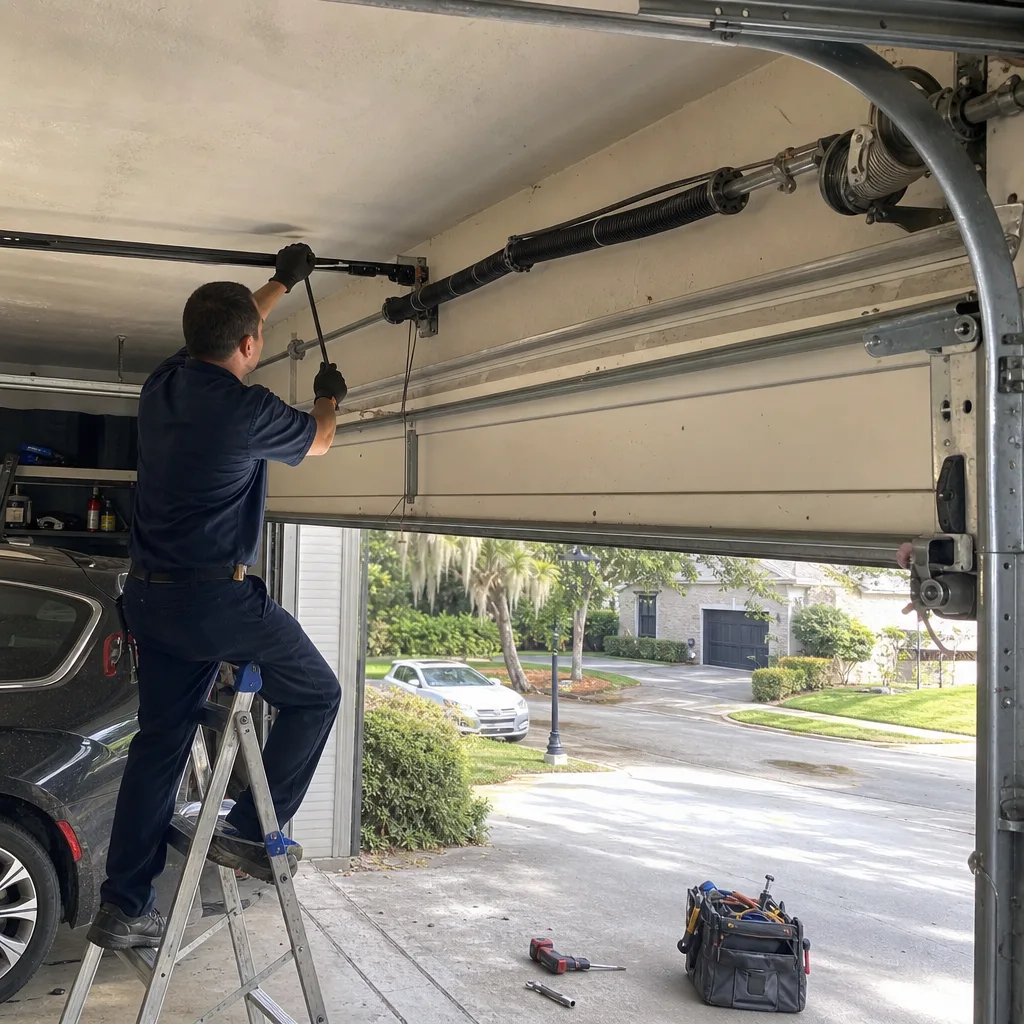
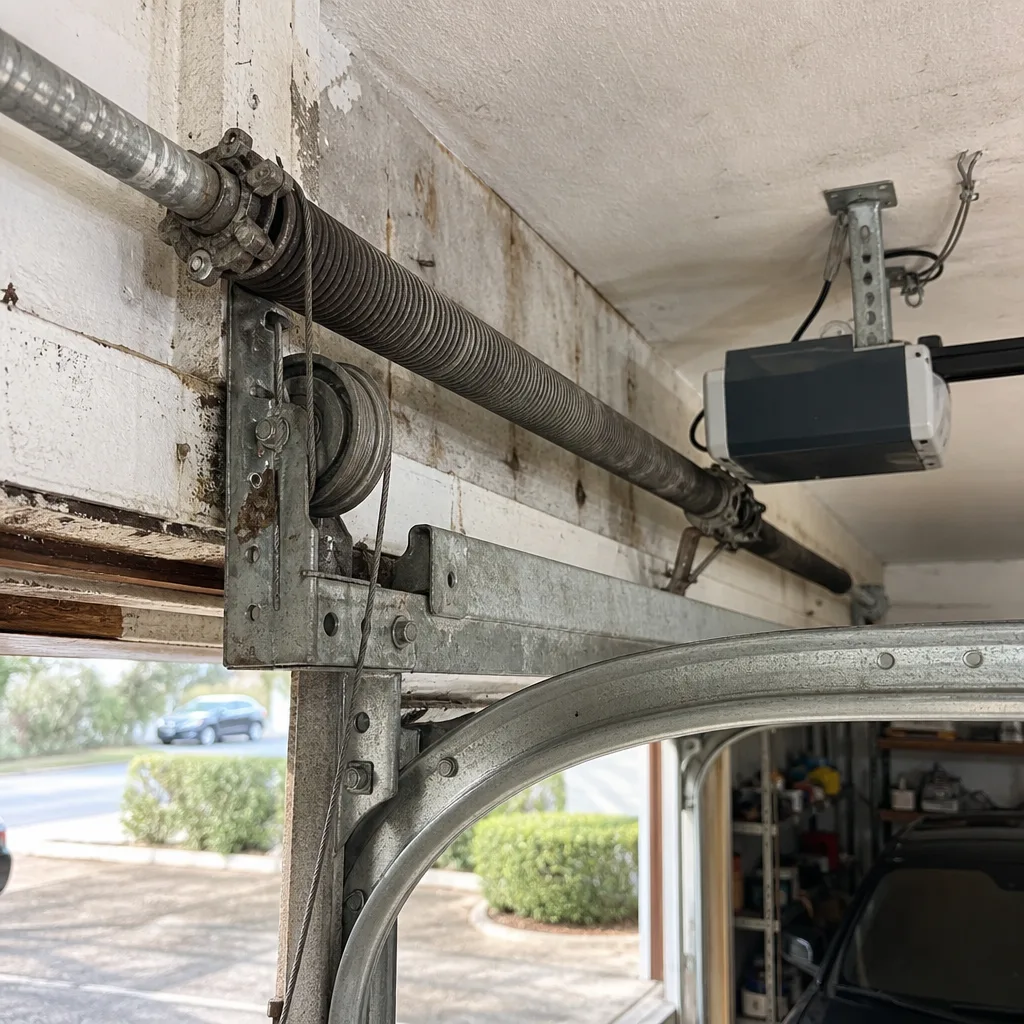
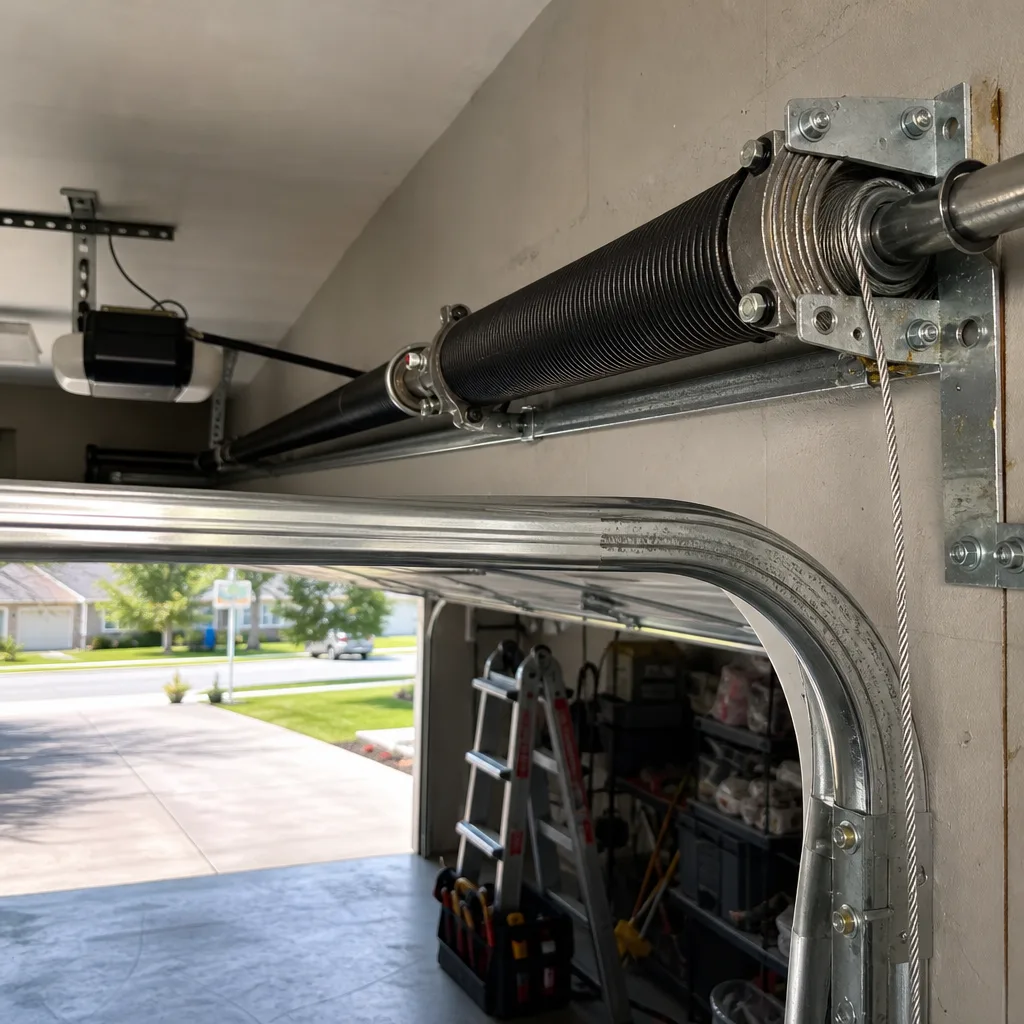
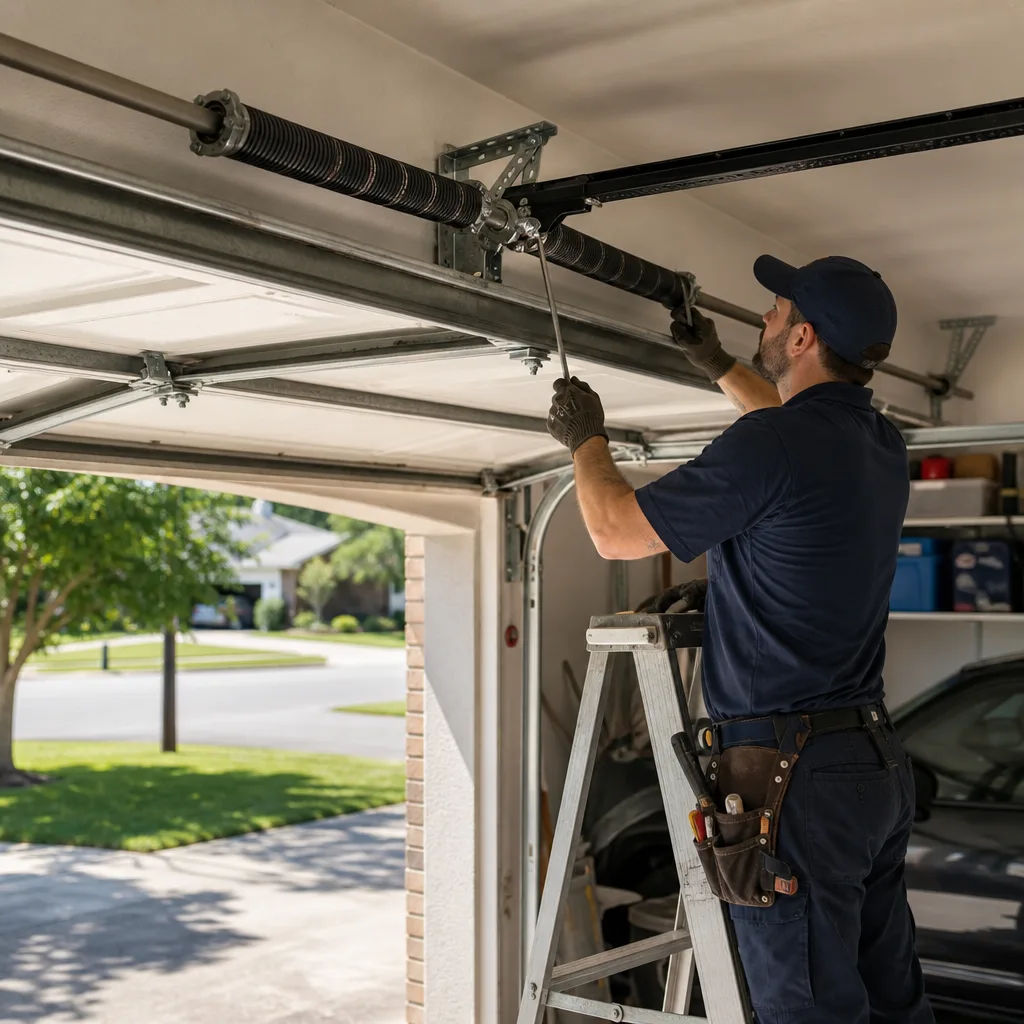
- Stand inside the garage with the door closed. Look at the torsion spring above the door. In Oviedo’s humidity, surface rust on a spring is normal, especially on older units. What you are looking for is a visible gap in the coil, which indicates a break. A broken spring on a Clopay or Amarr door usually makes a loud noise when it fails, but a small crack can develop silently before full separation.
- Run your eyes along each track from floor to ceiling. Check for gaps between the track and the wall brackets. Any bracket that has pulled away from the wall by more than a quarter inch is a problem in motion.
- Open the door with the opener. Watch the door during the full travel up and down. It should move at a constant speed without hesitation, pulsing, or shaking. Any shudder at a specific point usually points to a worn roller or a track section that has drifted.
- Pull the emergency release cord with the door fully open, then operate the door by hand. It should lift smoothly with one hand and stay in place when you let go. A door that feels heavy or wants to slam is a spring tension problem, not a fitness problem with your arm.
- Test the auto-reverse safety function. Place a roll of paper towels flat on the floor under the center of the door path. Close the door with the opener. The door should reverse within two seconds of contacting the roll. If it does not reverse, stop using the opener and check the safety sensor alignment and force settings before the next time your child or pet runs under it.
This inspection applies to every brand we service, including Raynor and Wayne Dalton doors, because the failure modes are universal: springs break, tracks drift, rollers wear, and safety systems fall out of calibration. The difference is that a homeowner who does this monthly catches the drift at month one, when the fix is a ten-minute adjustment, instead of at month eight, when the fix is a new logic board or a replacement spring.
If you want a deeper reference on what each component does and what common failures look like, our Garage Door Repair in Oviedo page covers the repair side of this same information.
The Three Measurements That Catch 80% of Alignment Problems
Alignment drift is the silent killer of garage door motors. A door that is misaligned by even half an inch makes the opener work harder on every cycle. Over time, that extra strain burns out motors, strips gears, and pushes chains off their sprockets. The good news: three measurements with tools you already own will catch most alignment drift before it becomes mechanical damage.
Measurement 1: Track gap at the door. With the door closed, measure the gap between the inner edge of the door panel and the inner edge of the vertical track on both sides. Use a tape measure. The gap should be identical on both sides within an eighth of an inch. If one side is wider, the track has shifted, or the door was never hung level. Check this measurement at the top, middle, and bottom of the door on both sides.
Measurement 2: Floor-to-header level check. Place a 4-foot level against each vertical track, checking for plumb. A track that leans inward or outward by more than a quarter inch over its length will bind rollers and cause the door to jerk during travel. This is the measurement we see skipped most often, because homeowners assume that if the door opens, the track is fine.
Measurement 3: Spring balance test at the halfway point. Disconnect the opener by pulling the emergency release, then lift the door manually to the halfway position and let go. The door should hold position or move no more than six inches in either direction. A door that drops from halfway is under-sprung; a door that rises is over-sprung. Both conditions shorten motor life and, in the case of under-sprung doors, put dangerous tension on the cable system.
Record these three measurements once at baseline, then re-check them quarterly. If any measurement changes by more than a quarter inch from baseline, you have caught a problem in the alignment phase, before it compounds. In our experience, a homeowner who tracks these three numbers catches a failing roller or a loosening bracket four to six months before it becomes a repair call. That is the difference between a $12 roller replacement and a $300 opener motor rebuild.
How to Photograph and Document Every Inspection
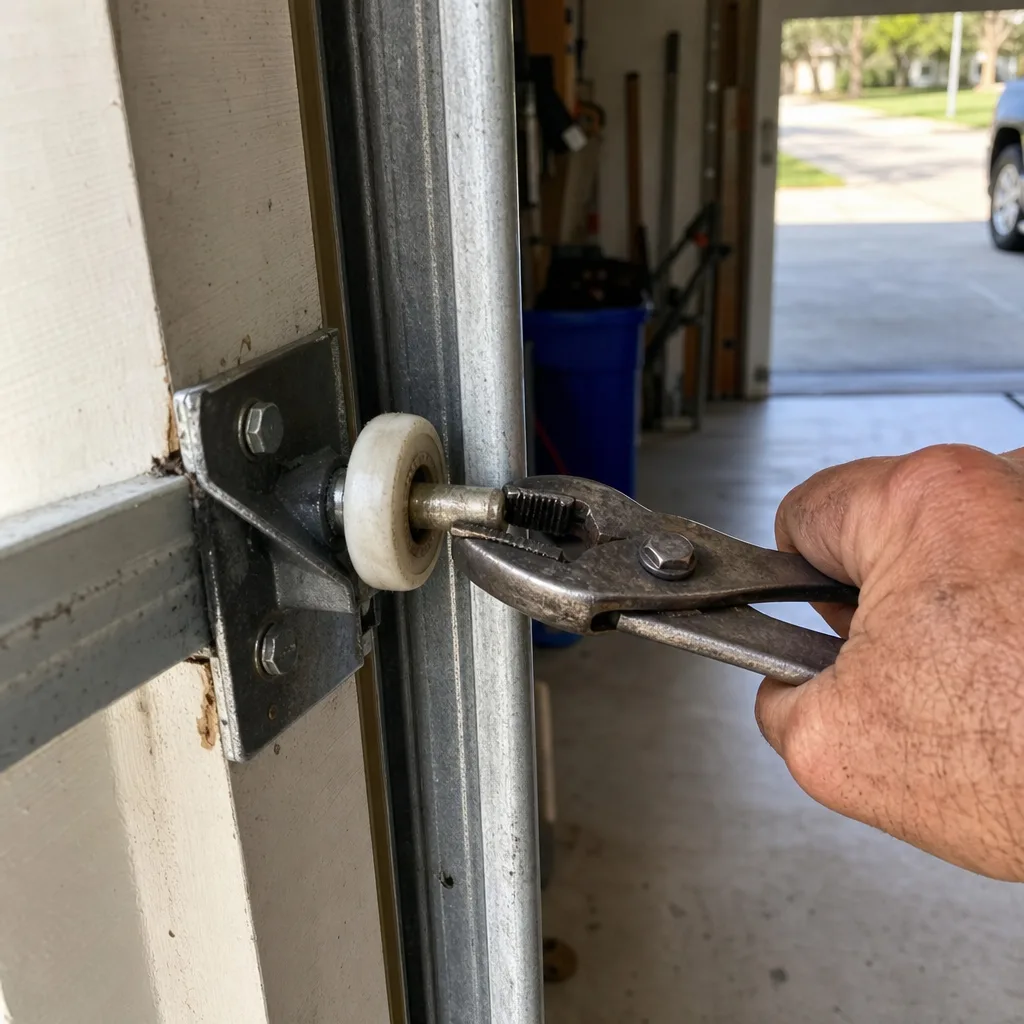
Documentation is not a hobby. It is your defense against a common contractor tactic: telling you a component “has been failing for a while” to justify a larger repair or to avoid warranty coverage, since most manufacturers only cover defects that occur suddenly. If you have timestamped photos showing the component in good condition a month earlier, that claim dies instantly.
Here is how to build a useful photo record:
- Use the same camera and the same position every time. Stand in the same spot, point at the same component, and take the same photo every month. Consistency is what makes comparison possible. A photo of the spring from a different angle tells you nothing.
- Photograph the torsion spring in full frame. The entire spring, both coils, from the center bracket. This is the photo that documents stress-corrosion cracking, surface rust progression, and any gap in the coil before a break.
- Photograph each track bracket where it meets the wall. Close-up, straight on. This documents whether the bracket has moved relative to the wall, which is your alignment evidence.
- Photograph the emergency release cord and the manual latch assembly. If a contractor later claims the door was tampered with, this photo shows the condition of the release mechanism.
- Photograph the opener unit from below, showing the rail, chain or belt, and the motor housing. Include the opener model label in frame when possible. LiftMaster and Chamberlain label positioning differs, but every unit has a model and serial tag somewhere.
- Store the photos in an album named “Garage Door” with automatic timestamps turned on. Your phone already records the date and time in the metadata. Do not rename the files. The metadata itself is evidence.
This documentation habit is why Servo Garage Doors Oviedo home service includes a photo record on every visit. The principle is the same: if a component fails, you should have evidence of what it looked like before it failed, not a verbal claim from someone with an incentive to sell you a bigger repair. Clause 4 of The Haven Standard, the written standard we operate under, requires our technicians to photograph the failed component before quoting a replacement. The customer sees the evidence before they see the price. Your monthly photo record does for you at home what our technicians do on the job: it removes the uncertainty from the conversation.
June: The Hurricane-Prep Sequence for Oviedo Garage Doors
Hurricane season runs from June 1 through November 30, and Oviedo sits far enough inland that direct hits are rare but far enough north that wind bands and pressure changes are not. The garage door is the single largest opening on most Oviedo homes and the most common structural failure point in hurricane-force winds. A reinforced garage door is not optional if you want your roof to stay attached; when the garage door fails, internal pressure blows the roof off from the inside.
Here is the June sequence, in order:
- Check the door’s wind-load rating. Look for a sticker or plate on the inside of a panel that shows the design pressure rating. Post-2015 Florida building code requires garage doors to meet specific wind-load standards based on the home’s exposure category. If your home was built before 2015 and the door has never been replaced, assume it is below current code and budget for a replacement before the next storm season. A Garage Door Installation in Oviedo is not just an aesthetic upgrade; it is the single biggest structural improvement you can make to your home’s hurricane resistance.
- Tighten every track bracket against the wall. Use a socket wrench on every lag bolt. In high winds, a door with loose brackets flexes and twists, and a flexing door is a door that fails.
- Inspect the horizontal tracks for any bend or bow. A track that has been hit by a car bumper or a ladder may look fine in normal operation but will bind under load. Run your hand along the top of each horizontal track, feeling for any irregularity.
- Test the door’s manual operation. Pull the release cord and open and close the door by hand several times. It should not bind, catch, or require significant force. If it does, resolve the mechanical issue before storm season, not during it.
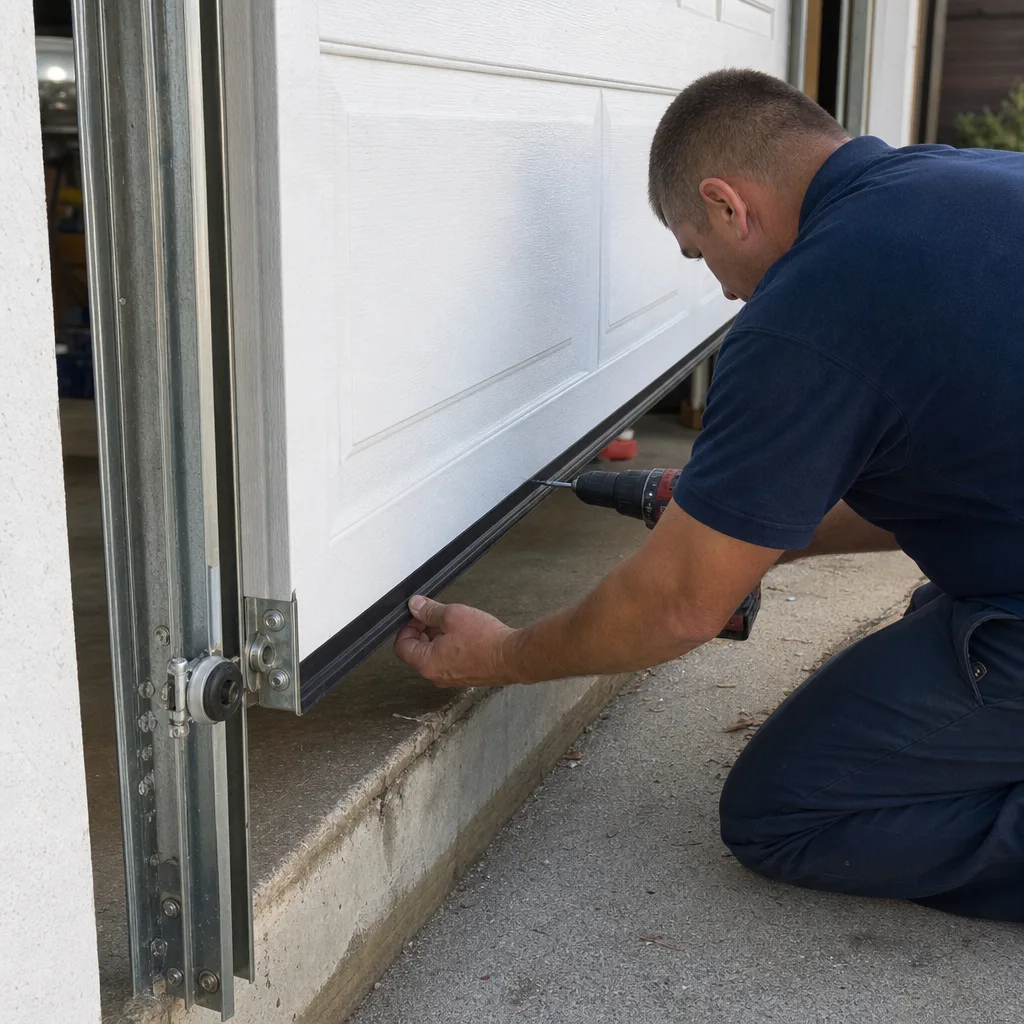
- Check the weather seal along the bottom of the door. The rubber astragal along the bottom should be intact and should press firmly against the floor. A damaged seal does not directly affect wind resistance, but it does affect water intrusion, and water intrusion during a storm causes interior damage that insurance adjusters love to attribute to “pre-existing wear.”
- Document everything. Photograph the door from the inside, the tracks, the brackets, and the bracing points. If you have a claim after a storm, these photos establish the door’s pre-storm condition.
Do this in the first two weeks of June, every year. If you wait until a storm is named, you will be competing with every other homeowner for parts and labor, and the lead time for a replacement door in Oviedo runs two to four weeks in peak season.
August: Peak Corrosion Season and What to Check
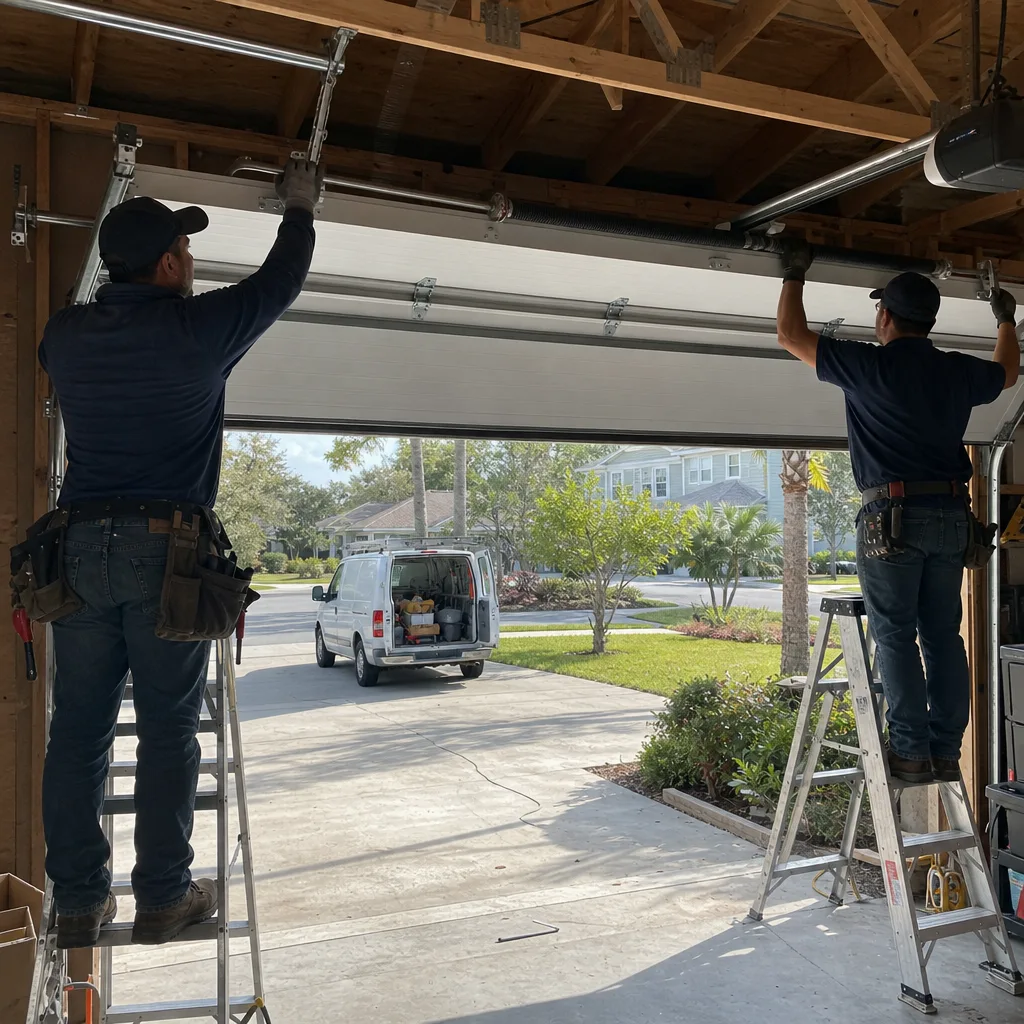
August in Oviedo is the month when your garage door is working against you. Humidity sits in the mid-80s, afternoon temperatures stay above 90, and the salt-laden air from the Atlantic, sixty miles away, is carried inland by the sea breeze. For galvanized torsion springs, this is the month when stress-corrosion cracking accelerates most aggressively.
Here is the uncomfortable truth: a spring that was lubricated with WD-40 in June is in active chemical failure by August. The solvent has stripped the galvanized coating, the humidity has introduced moisture to the bare steel, and the cyclic loading of daily door operation is propagating tiny cracks at the coil surface. The spring may not break in August, but the damage is being done.
What to check in August:
- Look for new surface rust on the spring. Some rust is normal. What you are looking for is a change from last month’s photo. Compare the August photo to your January baseline. If the rust pattern has spread noticeably, the spring’s protective coating is compromised.
- Listen for a pinging or creaking sound during operation. A spring under cyclic load will make noise as cracks propagate. A once-silent door that now creaks in August is telling you something.
- Check the bottom weather seal for cracking. Extreme heat and humidity breakdown rubber seals faster in Oviedo than in most of the country. A seal that was pliable in January may be cracked by August. Replacement is straightforward and inexpensive.
- Inspect the photo eyes for condensation. The safety sensor lenses can collect interior moisture during humid months, which scatters the beam and causes false reversals. Wipe them with a dry cloth if you notice any film.
- Check the external keypad and any exposed wiring. Summer storms bring lightning, and Oviedo sees its share of electrical surges. A keypad that works intermittently in August may have corrosion inside the battery compartment.
If your door is making a new noise, creaking, or behaving differently in August, do not wait for fall. The failure curve in our climate is not linear. Components that make it through August generally make it through the winter. Components that fail in August fail because the humidity window did them in. A repair call in August costs the same as one in October, but the September storm threat makes August the safer month to fix it.
Which Tasks Void Warranty Coverage (And Which Require a Licensed Technician)
Garage door manufacturers write warranty language that is stricter than most homeowners assume, and Florida’s hurricane-wind claims make manufacturers more defensive than in other states. Before you pick up a wrench, understand what the warranty says.
Tasks that commonly void manufacturer warranty if performed DIY:
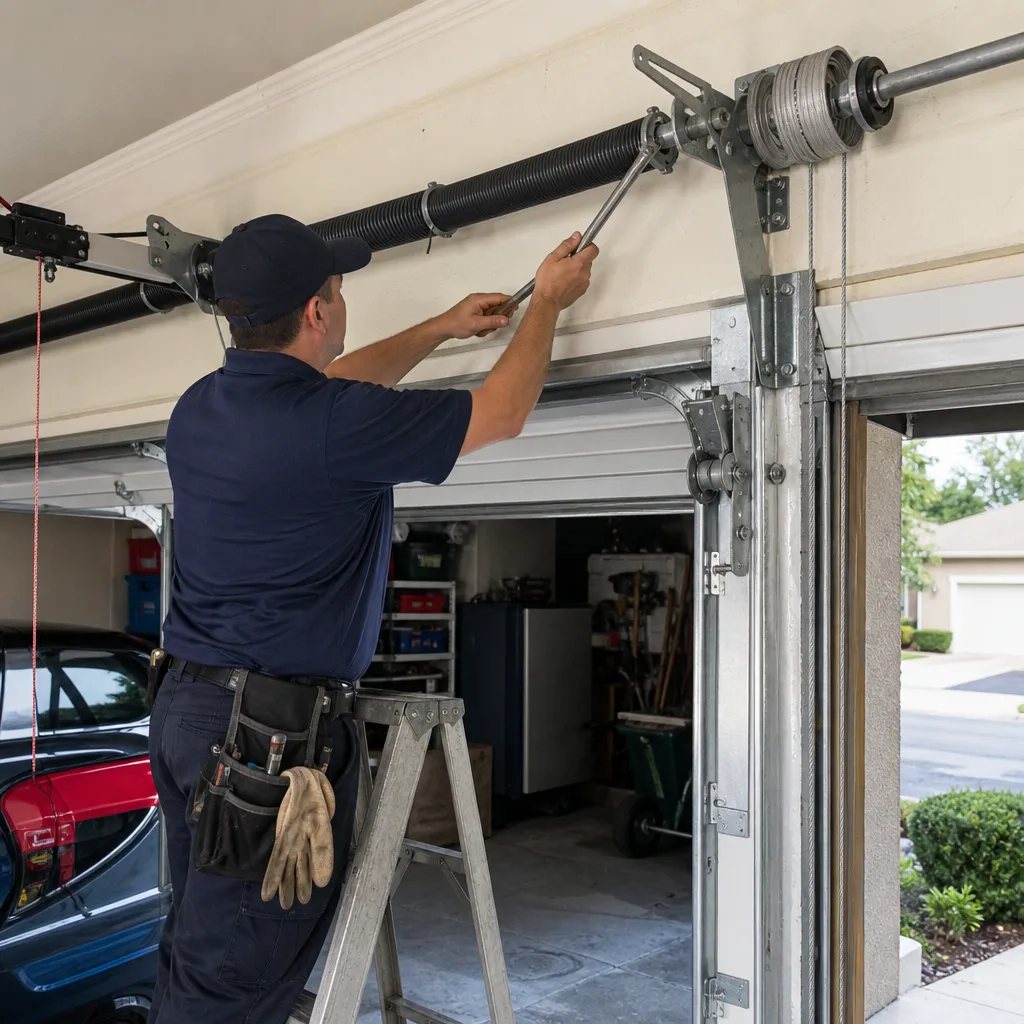
- Torsion spring replacement or adjustment. Every major manufacturer, including Clopay, Amarr, and Raynor, explicitly excludes spring failure from warranty coverage when the spring has been adjusted by an unqualified person. The spring contains enough stored tension to cause serious injury or death if mishandled. This is not a manufacturer being difficult; this is a safety boundary. Do not attempt to adjust or replace a torsion spring yourself. The risk profile is simply not acceptable.
- Track modification or re-drilling. Any modification to the track system, including adding holes or switching bracket positions, voids coverage on the track system and often on the door panels connected to it.
- Opener logic board replacement. LiftMaster and Chamberlain logic boards are covered under warranty only when replacement is performed by a licensed dealer or service center. A DIY board swap may void the entire opener warranty.
- Using non-approved lubricants. Several manufacturers now include language about lubricant compatibility. Petroleum-based sprays on nylon rollers or plastic gears can void coverage on those components. The product you use matters in writing, not just in practice.
Tasks that require a licensed contractor signature to preserve coverage:
- Wind-load certification after installation. If you install a new hurricane-rated door, the warranty and your insurance discount both depend on a licensed contractor signing the documentation. This is not a formality; it is the legal mechanism that keeps your coverage valid.
- Any repair related to a structural component. If the door frame, mounting points, or reinforcement struts need work, the manufacturer wants a licensed signature on the work order.
The homeowner-level tasks in this checklist are safe, useful, and within your control: inspection, documentation, cleaning, weather seal replacement, and basic sensor maintenance. The spring, the cables, and the opener internals belong to a trained professional. We have seen what happens when homeowners attempt spring replacement in Oviedo garages, and the injury potential is real. If your garage door needs spring work, cable replacement, or opener repair in Oviedo, our Garage Door Opener Repair & Installation in Oviedo service handles those repairs with a written price before work begins, per Clause 1 of The Haven Standard.
Common Mistakes to Avoid
- Lubricating in summer because “the door is noisy.” A noisy door in August is a symptom of a mechanical problem, not a lubrication deficit. Adding lubricant during high-humidity months accelerates spring corrosion. Diagnose the noise instead of masking it.
- Spraying WD-40 on everything that moves. WD-40 is a penetrating solvent with temporary lubricating properties. It is not a maintenance product. On galvanized springs, it actively strips protection. On nylon rollers, it degrades the plastic. The product you use matters.
- Skipping the monthly auto-reverse test. This takes thirty seconds and is the difference between a door that reverses on contact with a child and a door that does not. The safety systems in LiftMaster and Genie openers are reliable, but they drift out of calibration. Test monthly.
- Documenting nothing and relying on memory. Your memory of what the door looked like in January is useless in August. Photos, taken from the same position each month, are evidence. Evidence is the only thing that works when a contractor claims the problem predates their work.
- Lubricating the tracks. This is the most common garage door maintenance mistake in Oviedo. Homeowners see dry-looking tracks and reach for grease. Greasy tracks hold grit, accelerate roller wear, and cause the door to bind. Tracks stay dry, always.
- Waiting until a storm is named to start hurricane prep. The June window exists because it is early. By July, every garage door company in Seminole County is backed up. Do the work before the season, not during it.
- Ignoring the halfway balance test. A door that slams from the halfway point is a spring problem. Every day you operate it, the motor is working harder than it was designed to. Replace the spring before the motor becomes the next thing on the list.
When to Call a Professional
Most of the tasks in this guide are designed for a homeowner with no specialized tools and no background in garage door mechanics. But there are lines that should not be crossed. If your spring shows a visible gap or makes a distinct snapping sound during operation, stop using the door and call a professional. Spring replacement carries enough stored energy to cause life-altering injury, and it is the one repair that should never be attempted as a DIY project. For professional help, see our Garage Door Repair services. If your door does not pass the halfway balance test, or if you have adjusted the alignment twice and it keeps drifting, the underlying problem is likely a worn bearing or a failing roller that requires disassembly. If your opener makes a grinding noise from the motor housing, the gear set is stripping and the unit needs servicing before it seizes. Servo Garage Doors Oviedo offers free estimates in Oviedo; call (689) 666-4089 and we will give you a written price before any work starts, with a documented photo record of what we found and what we did when we leave.
Frequently Asked Questions
Lubricate moving parts twice per year, in January and November, when Oviedo’s humidity drops low enough for the lubricant to cure without trapping moisture against metal surfaces. Lubricating during humid months accelerates spring corrosion and shortens component life. If you miss both windows, wait for the next one rather than lubricating in summer. For an exact product recommendation for your specific door, call (689) 666-4089 and we will tell you what works on your components.
A door that drops when released from the opener is under-sprung, which means the torsion spring tension is insufficient to counterbalance the door’s weight. Continue using the door and the motor is carrying excess load on every cycle, which will eventually burn out the motor or strip the gears. Stop using the opener and call for a spring tension assessment. We quote a flat written price before any work starts, per Clause 1 of The Haven Standard.
If your home was built before 2015 and the original garage door is still in place, the answer is likely yes. Florida building code strengthened wind-load requirements after the 2004 hurricane season, and pre-2015 doors often fall below current standards. Reinforcement kits and panel braces are available for some doors, but a full replacement with a wind-rated door is the more durable solution. Call (689) 666-4089 for a written assessment with no obligation.
No. Torsion springs store enough tension to cause serious injury or death if mishandled, and every major manufacturer voids warranty coverage when springs are adjusted by an unqualified person. This is the one garage door repair that should never be a DIY project, regardless of what you have seen on video and no matter how mechanically inclined you are. If you need help selecting a qualified technician, read our How to Hire a Garage Door Contractor in Oviedo: A Step-by-Step Guide. We do not say this to sell you a service; we say it because the injury statistics are real.
A grinding noise usually indicates a mechanical problem, not a lubrication deficit. The most common culprits are worn rollers, a misaligned track, or stripped opener gears. Lubricant cannot fix a worn bearing or a gear that has already lost teeth. If the noise persists after proper lubrication in a low-humidity window, diagnose the mechanical issue before it compounds. Call us at (689) 666-4089 with the noise you are hearing and we will walk you through what to check.
No. The flat written price we quote is the price you pay, and it is delivered before any work starts. That is Clause 1 of The Haven Standard, the written standard we operate under. This applies to every job, including garage door repair in Oviedo, opener service, and new door installation. The price we quote is the price on your invoice.
The Bottom Line
Oviedo’s garage doors fail on a calendar, not a random interval. The spring breaks in summer because it was lubricated wrong in winter. The motor burns out in fall because the alignment drifted in spring and no one measured it. The track binds in hurricane season because the brackets were loose in May and no one sized them up in June. A maintenance checklist built around this specific failure calendar catches problems in the phase where they cost tens of dollars to fix, not hundreds. For more guides & resources, explore our blog. The monthly inspection is five minutes. The January lubrication is thirty. The June hurricane sequence is an hour. Together, they keep a garage door running years past its expected service life, and they give you the documentation to prove what you did. If a repair ever crosses the line into professional territory, call (689) 666-4089. We will give you a written price before any work starts, and a photo record of what we found when the job is done. That is how garage door service should work in Oviedo, and it is how we have done it since 2015.
Written by Marcus Deller, Owner at Servo Garage Doors Oviedo, serving Oviedo since 2015.